Widal Test, Serum
What it is
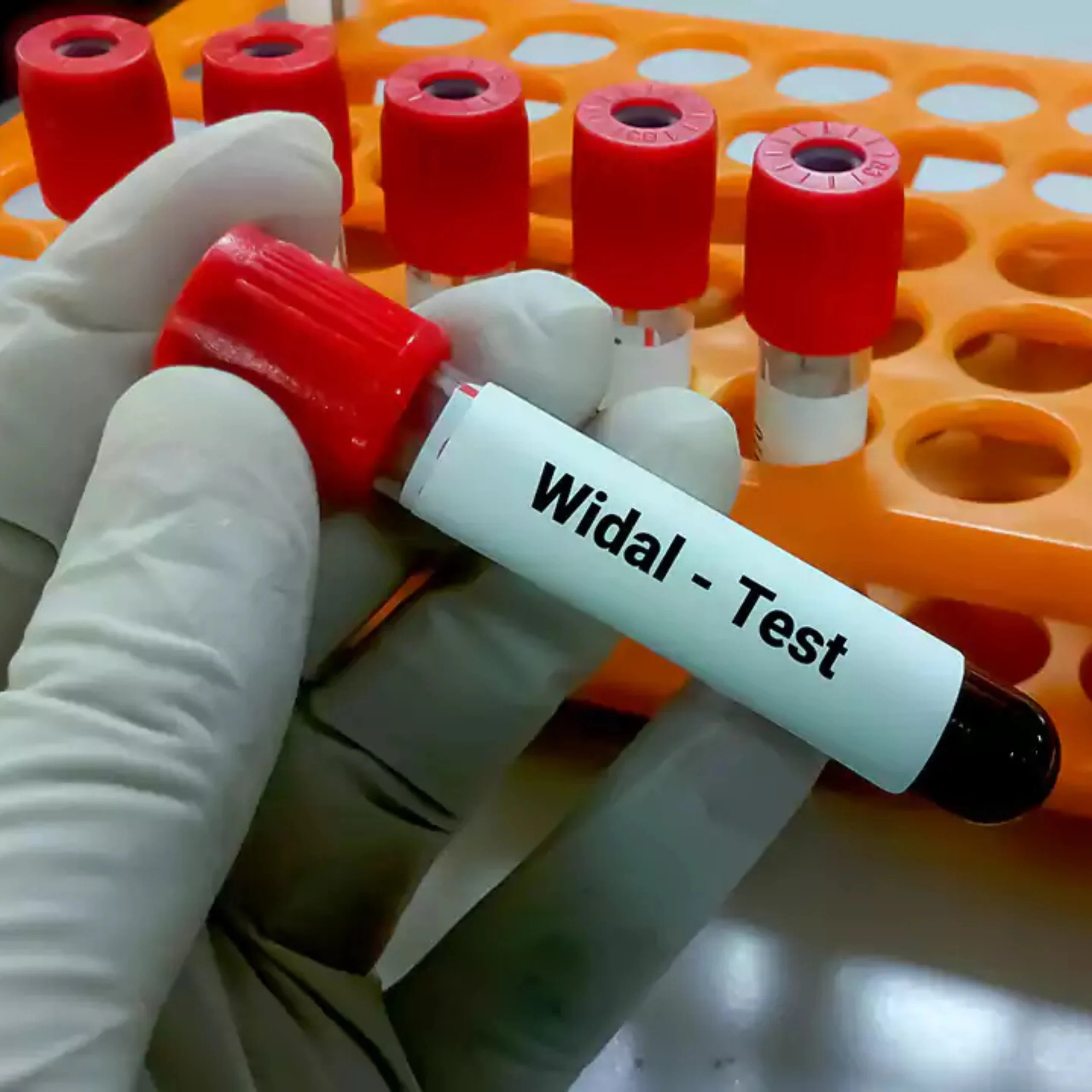
The Widal Test is a blood test used to detect antibodies (agglutinins) in the serum against Salmonella typhi and Salmonella paratyphi, the bacteria responsible for typhoid and paratyphoid fever. It helps in the diagnosis of enteric fever, especially in regions where typhoid is common.
Uses
This test is commonly used to aid in the diagnosis of typhoid fever, to differentiate between Salmonella infections, and to guide further confirmatory testing when a patient presents with prolonged fever and gastrointestinal symptoms.
Symptoms That May Lead to the Test
Doctors may recommend a Widal test if a patient has symptoms such as prolonged fever, abdominal pain, diarrhea or constipation, headache, loss of appetite, fatigue, or history of exposure to typhoid-endemic areas.
Abnormal Results
Positive Result: A rising antibody titer (O and H agglutinins) may suggest recent or current infection with Salmonella typhi or paratyphi. However, false positives may occur due to prior vaccination or past infection.
Negative Result: Indicates no significant antibody levels. Early-stage infections may still test negative before antibodies develop.
Risks
The Widal test is a routine blood test with minimal risks. Side effects are limited to mild pain, bruising, or bleeding at the puncture site, and rarely dizziness or infection.


Reviews
There are no reviews yet.