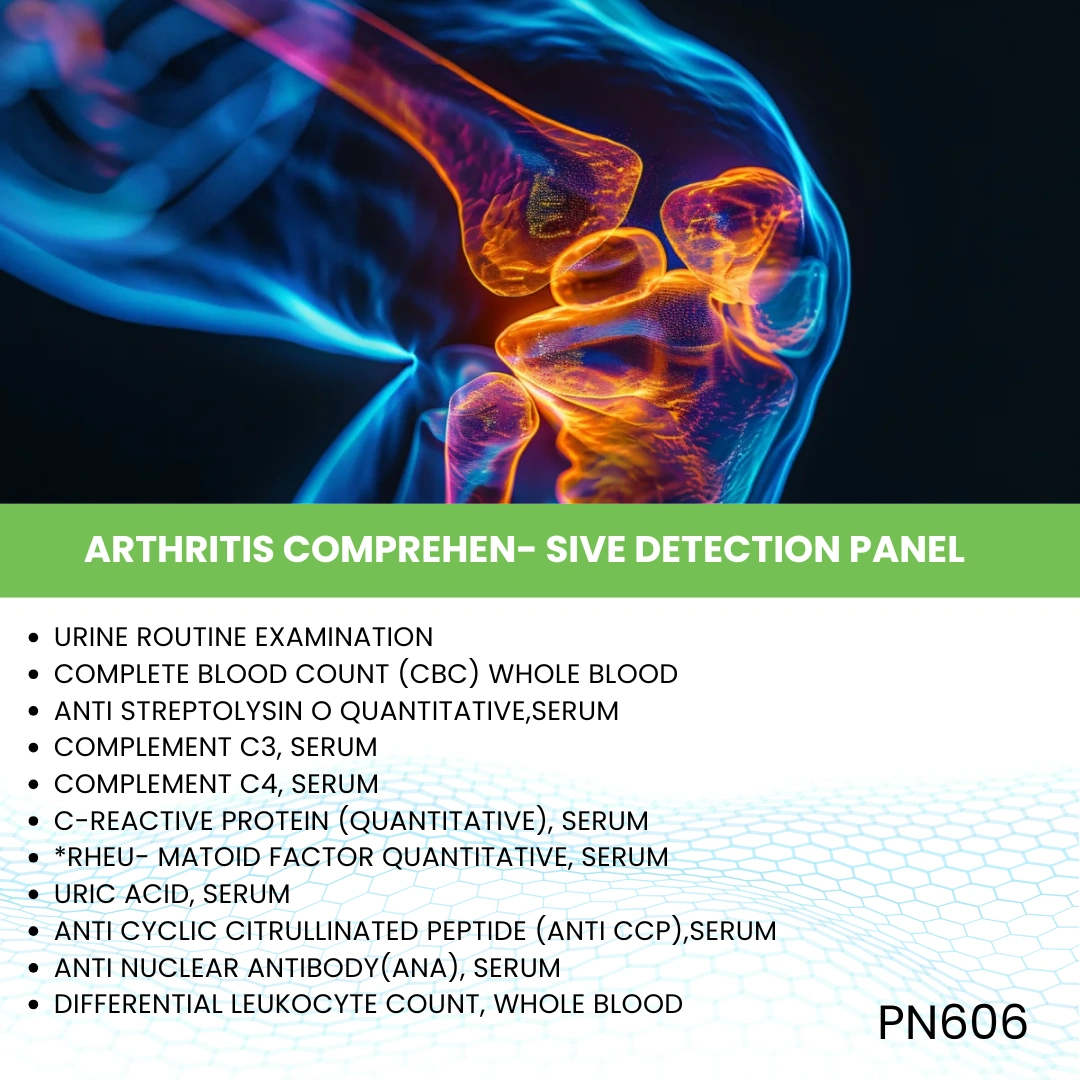
Arthritis Comprehensive Detection Panel
What it is
The Arthritis Comprehensive Detection Panel is a group of advanced blood tests designed to evaluate multiple markers associated with different types of arthritis and autoimmune joint disorders. It provides a detailed analysis to help diagnose rheumatoid arthritis, lupus, gout, psoriatic arthritis, and other inflammatory conditions affecting the joints.
Uses
This panel is used to diagnose autoimmune and inflammatory joint diseases, differentiate between various forms of arthritis, and detect early signs of connective tissue disorders. It also assists in monitoring disease activity, assessing treatment response, and managing long-term complications of chronic arthritis.
Symptoms That May Lead to the Test
Doctors may recommend this test if you experience persistent joint pain, swelling, stiffness (especially in the morning), redness or warmth around joints, chronic fatigue, unexplained fever, skin rashes, or if you have a family history of autoimmune or rheumatic diseases.
Abnormal Results
Positive or abnormal findings may indicate:
– Rheumatoid arthritis: Elevated rheumatoid factor (RF) or anti-CCP antibodies.
– Lupus and connective tissue disorders: Positive antinuclear antibody (ANA) and related markers.
– Inflammatory arthritis: High C-reactive protein (CRP) or erythrocyte sedimentation rate (ESR).
– Gout: Increased uric acid levels.
– Other autoimmune conditions: Specific antibody markers included in the panel.
Risks
The test requires a standard blood sample and carries minimal risks. Mild pain, bruising, or bleeding may occur at the puncture site. Rarely, dizziness or infection can develop.


Reviews
There are no reviews yet.