ASKA (Striated Muscle Antibody)
What it is
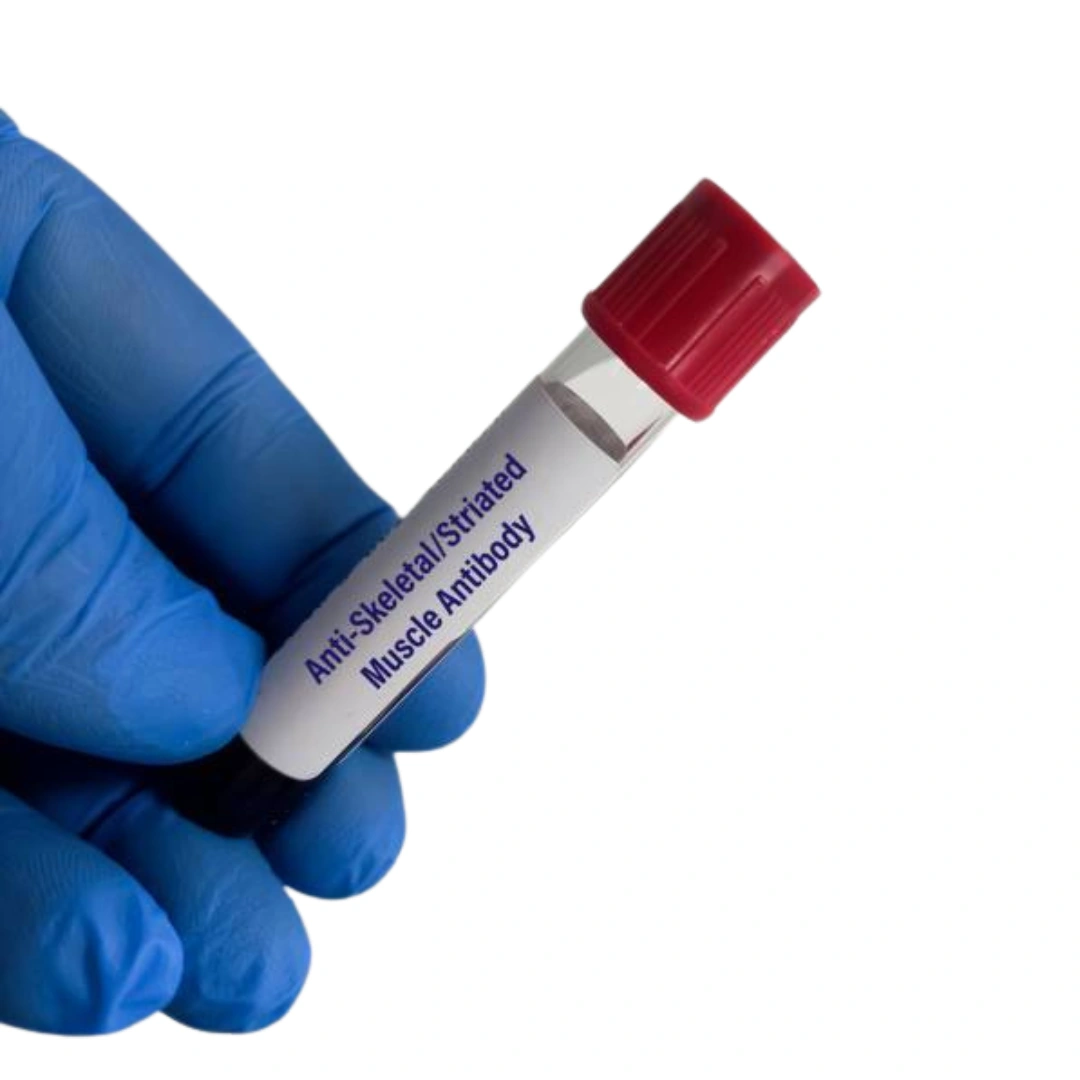
The ASKA (Striated Muscle Antibody) test detects autoantibodies directed against striated muscle proteins. These antibodies are commonly associated with autoimmune conditions such as myasthenia gravis and can also be seen in patients with thymomas or other autoimmune disorders. The presence of these antibodies helps in diagnosis and disease correlation.
Uses
This test is primarily used to support the diagnosis of myasthenia gravis, especially in patients who test negative for acetylcholine receptor antibodies. It also helps in screening for associated thymoma and evaluating autoimmune activity in certain neuromuscular conditions.
Symptoms That May Lead to the Test
Doctors may recommend this test if a patient has symptoms such as muscle weakness, drooping eyelids (ptosis), difficulty swallowing, double vision, fatigue, or suspected thymoma. It is often ordered alongside other antibody tests for better diagnostic accuracy.
Abnormal Results
Positive Result: Indicates the presence of striated muscle antibodies, often associated with myasthenia gravis, thymoma, or other autoimmune conditions.
Negative Result: Suggests absence of striated muscle antibodies, though it does not completely rule out autoimmune neuromuscular disease.
Risks
The ASKA test is a routine blood test with minimal risks. Possible side effects include slight pain, bruising, or bleeding at the puncture site, and in rare cases dizziness or infection.


Reviews
There are no reviews yet.