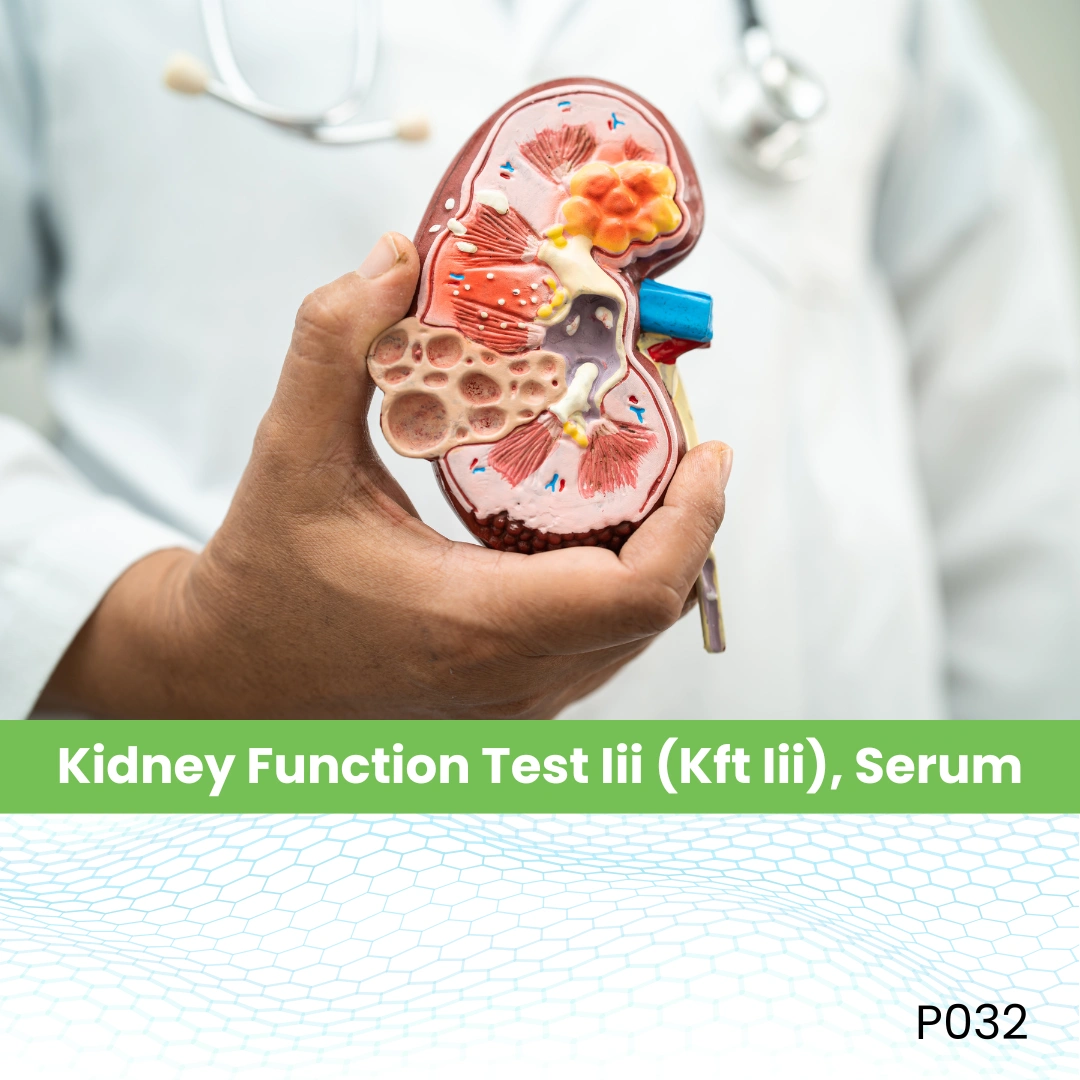
Kidney Function Test III (KFT III), Serum
What it is
The Kidney Function Test III (KFT III), Serum is a panel of blood tests that measure different markers to evaluate how well the kidneys are functioning. The test typically includes serum creatinine, blood urea nitrogen (BUN), uric acid, electrolytes (sodium, potassium, chloride), calcium, phosphorus, and estimated glomerular filtration rate (eGFR). Together, these markers provide an overall picture of kidney health and related metabolic balance.
Uses
This test is used to detect early signs of kidney damage, monitor chronic kidney disease (CKD), and evaluate how well the kidneys are regulating electrolytes and waste products. It is also ordered to monitor the effects of medications that may impact kidney function and as part of routine health check-ups or pre-surgical assessments.
Symptoms That May Lead to the Test
Doctors may recommend a KFT III if you experience swelling in the legs or face, reduced or excessive urination, foamy or bloody urine, persistent fatigue, high blood pressure, nausea, or unexplained weight loss. It is especially important for patients with diabetes, hypertension, heart disease, or a family history of kidney problems.
Abnormal Results
Elevated Creatinine and BUN: Suggests impaired kidney function, dehydration, or kidney disease.
Low eGFR: Indicates decreased filtering ability of the kidneys, which may signal chronic kidney disease.
Abnormal Electrolytes: High or low sodium, potassium, or chloride can point to kidney dysfunction, dehydration, or metabolic imbalances.
Abnormal Calcium/Phosphorus: May suggest kidney-related bone or mineral disorders, common in advanced CKD.
Risks
The test involves a routine blood draw, which carries minimal risks such as mild pain, bruising, or dizziness at the puncture site. Serious complications are extremely rare.


Reviews
There are no reviews yet.