Dialysis Monitor
What it is
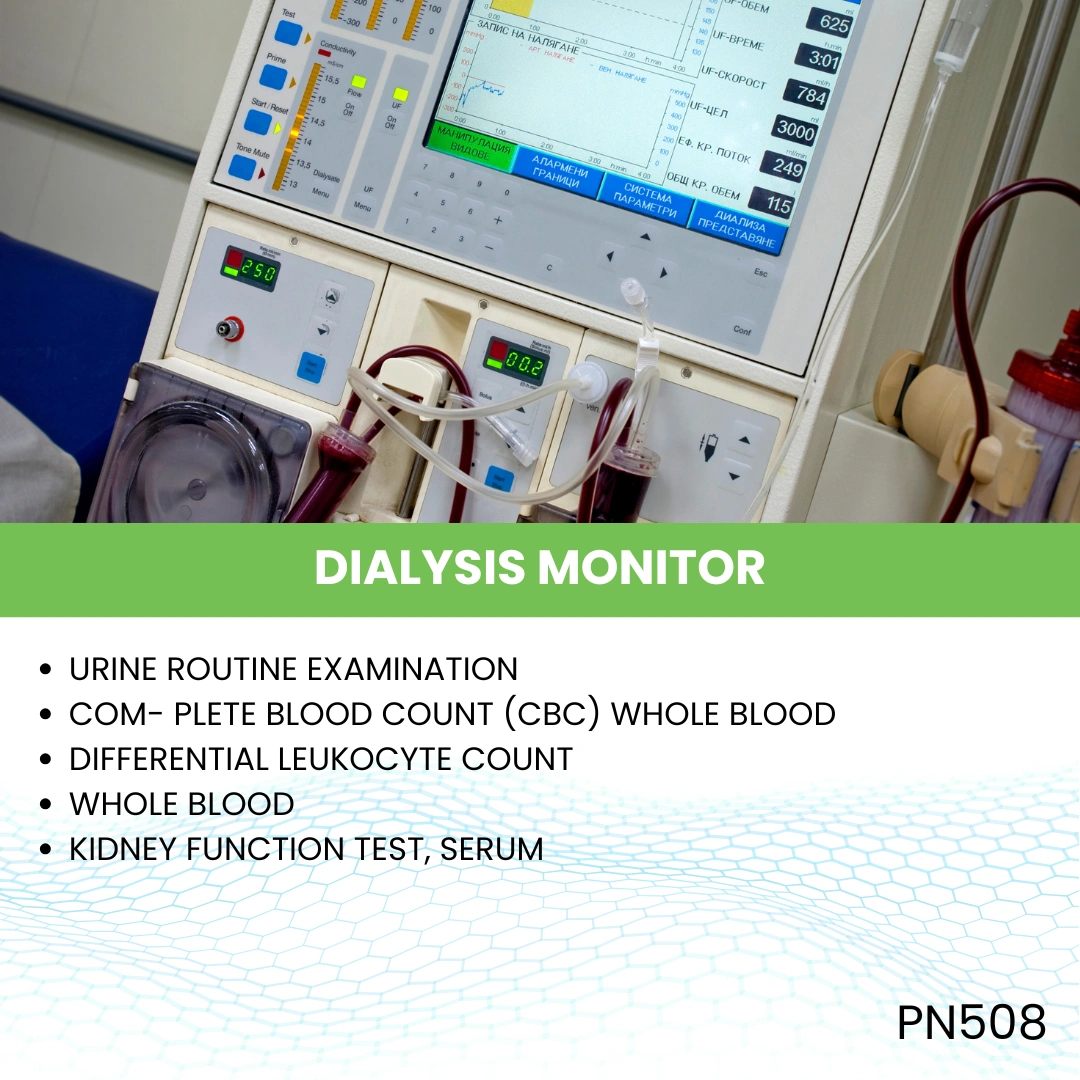
The Dialysis Monitor test is a panel of investigations designed to track the ongoing health and treatment response of patients receiving dialysis. It typically includes kidney function tests, electrolyte measurements, hemoglobin levels, and other markers that help assess dialysis adequacy and detect complications early.
Uses
This test is used to regularly evaluate patients on hemodialysis or peritoneal dialysis. It helps doctors monitor waste removal efficiency, electrolyte and fluid balance, anemia management, and overall health status. It guides adjustments in dialysis schedules, medications, and dietary plans to improve quality of life and outcomes.
Symptoms That May Lead to the Test
While this test is routine for dialysis patients, it may be especially indicated if a patient develops unusual fatigue, muscle cramps, irregular heartbeat, swelling, shortness of breath, bone pain, or changes in blood pressure. These may point to complications like anemia, electrolyte imbalance, or dialysis inadequacy.
Abnormal Results
Elevated Urea/Creatinine: Suggests inadequate dialysis or increased toxin buildup in the blood.
Electrolyte Imbalances: Abnormal potassium, sodium, calcium, or phosphate levels may increase risks of heart rhythm problems, bone disease, or fluid overload.
Low Hemoglobin: Indicates anemia of chronic kidney disease, which may need erythropoietin or iron therapy.
Normal/Stable Results: Indicate effective dialysis and good overall management, though regular monitoring remains essential.
Risks
The test usually requires routine blood samples, often collected during dialysis sessions. Risks are minimal, including mild pain, bruising, or dizziness at the puncture site, which resolve quickly.


Reviews
There are no reviews yet.