APLA Syndrome Profile
What it is
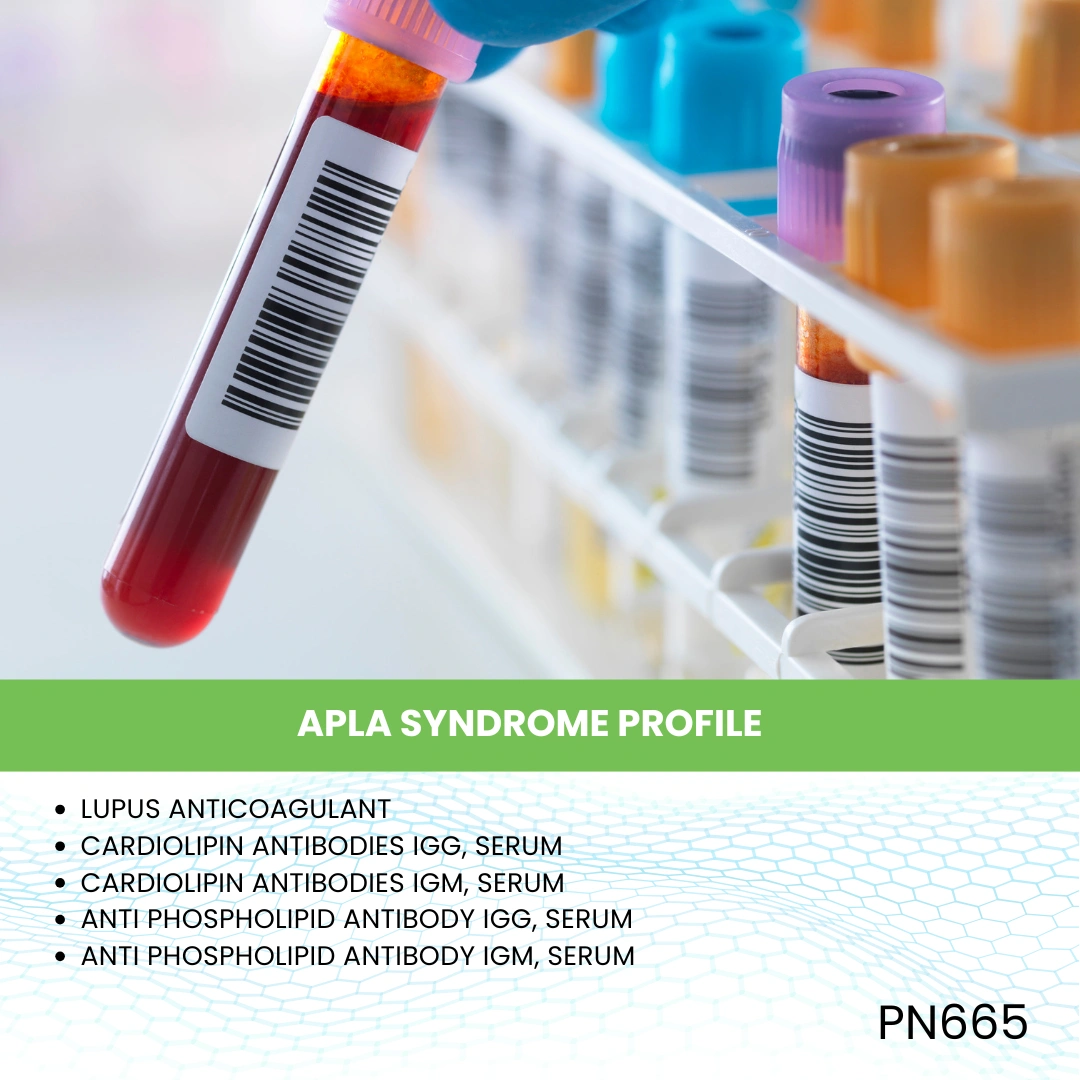
The APLA (Antiphospholipid Antibody) Syndrome Profile is a blood test that detects antibodies associated with Antiphospholipid Syndrome (APS), an autoimmune disorder. APS increases the risk of abnormal blood clotting, recurrent miscarriages, and other pregnancy complications. The profile typically includes tests for lupus anticoagulant, anticardiolipin antibodies (IgG, IgM), and anti-beta-2 glycoprotein I antibodies.
Uses
This test is used to diagnose Antiphospholipid Syndrome, investigate unexplained blood clots, and evaluate women with recurrent pregnancy loss. It also helps in monitoring patients with autoimmune conditions like systemic lupus erythematosus (SLE), where APS may develop as a complication.
Symptoms That May Lead to the Test
Doctors may recommend this test if a patient has a history of unexplained deep vein thrombosis (DVT), stroke at a young age, repeated miscarriages, stillbirths, or autoimmune disease with clotting issues.
Abnormal Results
Positive Results: The presence of lupus anticoagulant, anticardiolipin, or anti-beta-2 glycoprotein I antibodies suggests Antiphospholipid Syndrome and a higher risk of blood clot formation and pregnancy-related complications.
Negative Results: Absence of these antibodies usually rules out APS, although repeat testing may be needed if symptoms persist.
Risks
The APLA profile is a simple blood test with minimal risks. These include mild pain, bruising, or bleeding at the puncture site, and in rare cases, dizziness or infection.


Reviews
There are no reviews yet.