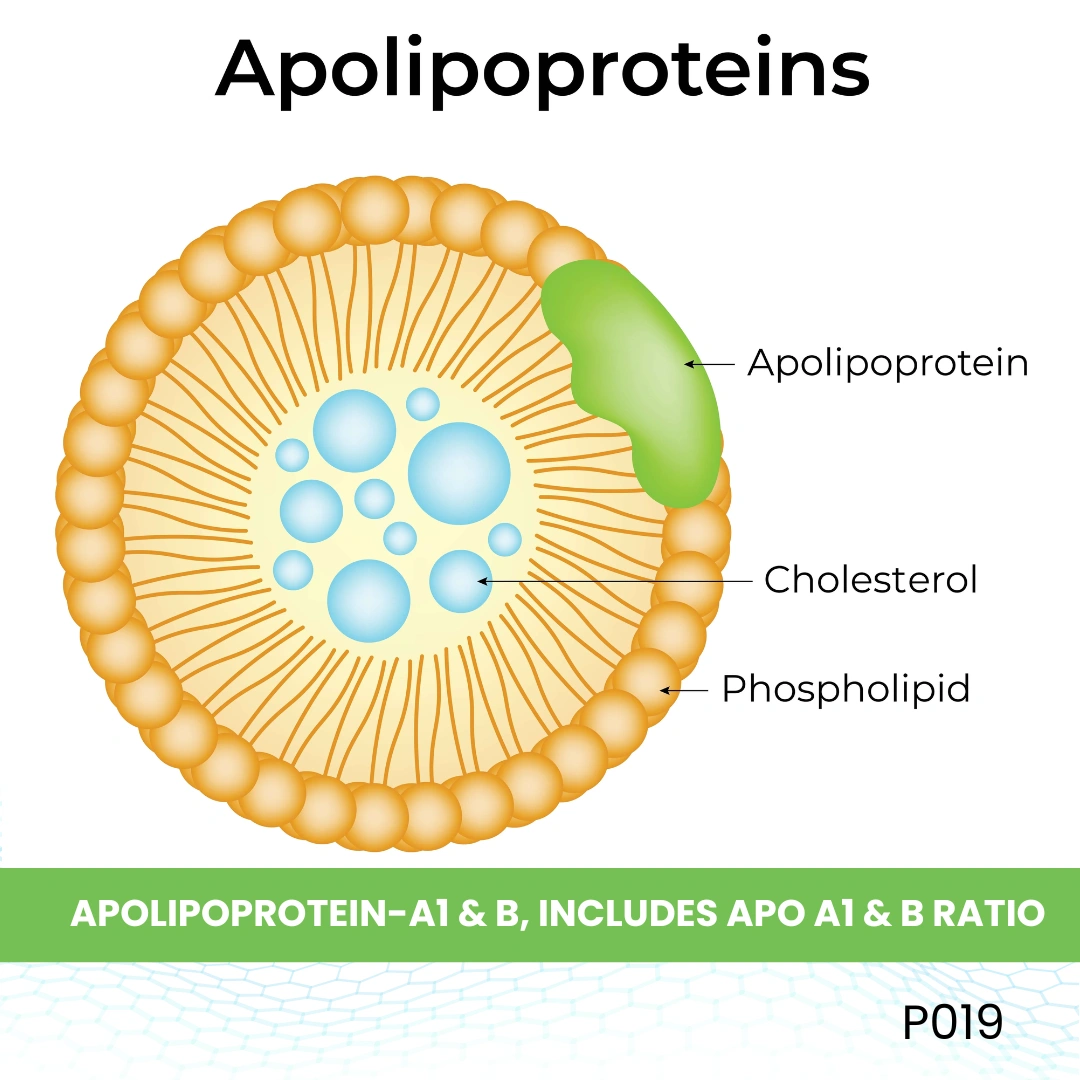
Apolipoprotein-A1 & B, Includes Apo A1 & B Ratio
What it is
The Apolipoprotein-A1 & B test measures the levels of Apo A1 and Apo B proteins in the blood, along with calculating their ratio. Apo A1 is the main protein component of HDL cholesterol (good cholesterol), while Apo B is the main protein of LDL cholesterol (bad cholesterol). The Apo B/A1 ratio is considered a strong indicator of cardiovascular risk.
Uses
This test helps in assessing the risk of cardiovascular disease, evaluating cholesterol metabolism more accurately than standard lipid profiles, and monitoring patients with high cholesterol or a family history of heart disease. It is also used to guide treatment decisions for lipid-lowering therapies.
Symptoms That May Lead to the Test
Doctors may recommend this test if you have risk factors for heart disease, such as high cholesterol, hypertension, diabetes, obesity, smoking, or a family history of premature heart disease. It may also be advised if you have unexplained chest pain, shortness of breath, or metabolic syndrome.
Abnormal Results
High Apo B / Low Apo A1: Indicates increased cardiovascular risk due to higher levels of LDL cholesterol and lower protective HDL cholesterol.
Low Apo B / High Apo A1: Suggests a healthier lipid profile with lower risk of heart disease.
High Apo B/A1 Ratio: Strongly associated with a greater likelihood of developing atherosclerosis and coronary artery disease.
Risks
The test involves a simple blood draw with minimal risks. Possible side effects include mild pain, bruising, or bleeding at the puncture site. Rarely, dizziness or infection may occur.


Reviews
There are no reviews yet.