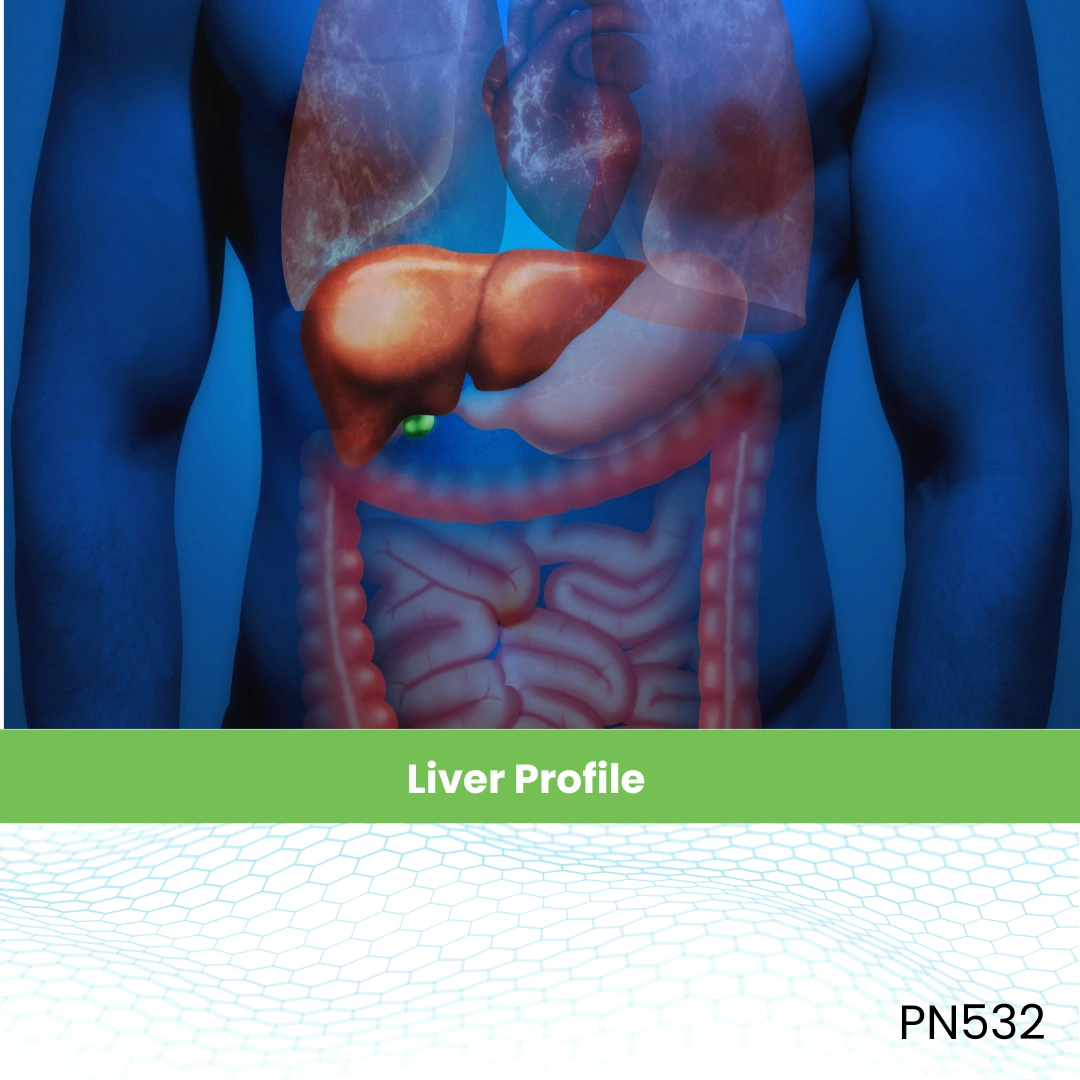
Liver Profile
What it is
The Liver Profile is a comprehensive blood test panel that evaluates the overall health and function of the liver. It typically includes tests such as bilirubin (total and direct), SGPT (ALT), SGOT (AST), alkaline phosphatase (ALP), gamma-glutamyl transferase (GGT), albumin, globulin, total protein, and sometimes prothrombin time (PT). These markers help assess how well the liver is metabolizing nutrients, detoxifying the blood, producing proteins, and maintaining overall metabolic balance.
Uses
This test is used to diagnose liver diseases, monitor chronic conditions like hepatitis or fatty liver, and evaluate damage caused by alcohol, toxins, or long-term medication use. It is also recommended in routine health check-ups, pre-surgical evaluations, and to monitor treatment progress in patients with liver disorders.
Symptoms That May Lead to the Test
Doctors may recommend a Liver Profile if you have symptoms such as yellowing of the skin or eyes (jaundice), persistent fatigue, nausea, vomiting, abdominal swelling or pain, dark urine, pale stools, or unexplained weight changes. Individuals with a history of alcohol use, hepatitis infection, obesity, or family history of liver disease may also benefit from this test.
Abnormal Results
High ALT/AST: May indicate hepatitis, alcohol-related liver damage, or fatty liver disease.
Elevated Bilirubin: Suggests jaundice, bile duct obstruction, or impaired liver function.
High ALP/GGT: Often associated with bile duct disorders or alcohol-related injury.
Low Albumin or Abnormal Protein Levels: May point to chronic liver disease, cirrhosis, or malnutrition.
Prolonged PT: Indicates reduced ability of the liver to produce clotting factors.
Risks
The test involves a simple blood draw. Risks are minimal, including mild pain, bruising, or dizziness at the puncture site. Serious complications are extremely rare.


Reviews
There are no reviews yet.