Protein/Creatinine Ratio, Random Urine
What it is
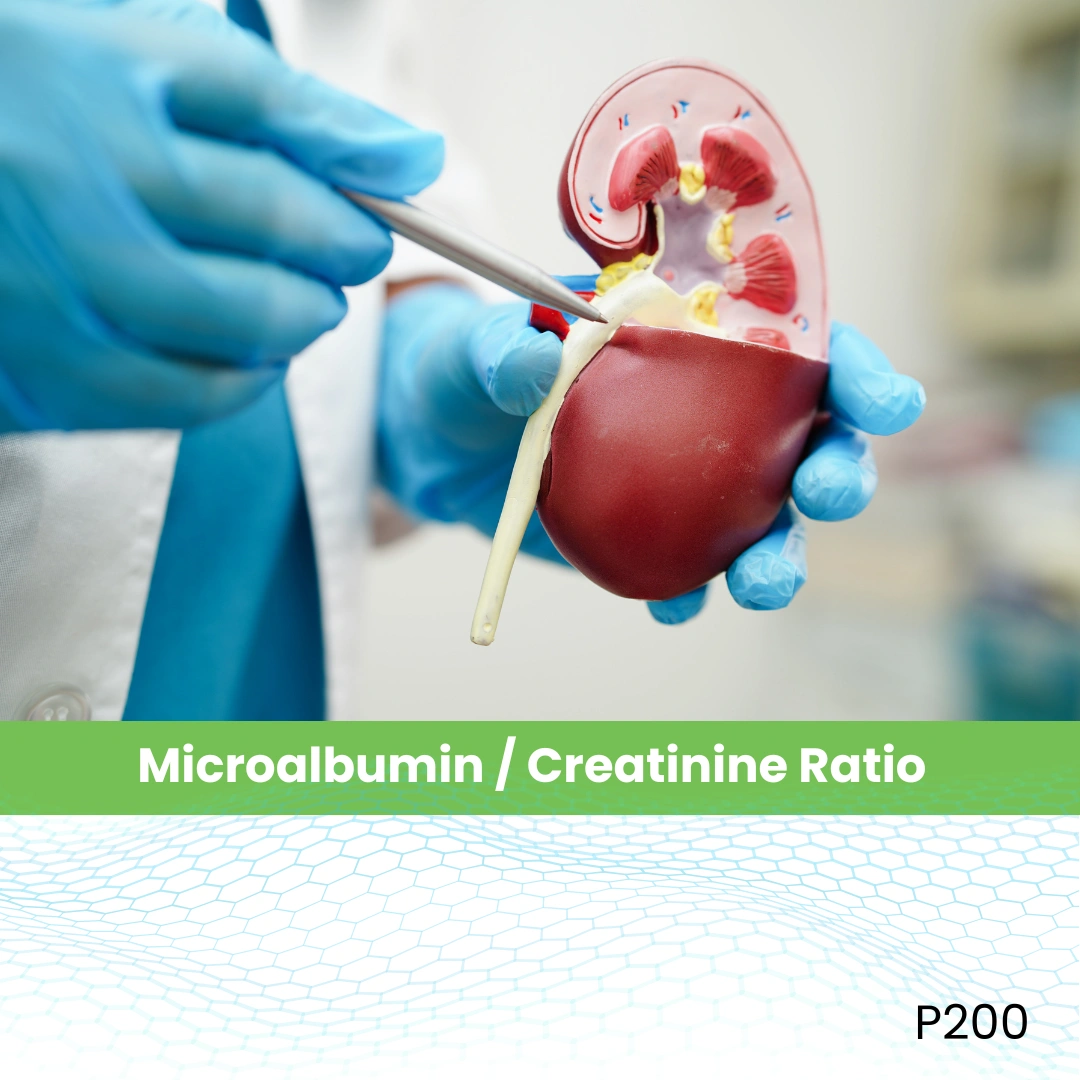
The Protein/Creatinine Ratio, Random Urine test measures the amount of protein in a single urine sample relative to creatinine levels. This ratio helps estimate daily protein loss without the need for a full 24-hour urine collection. It is a convenient and reliable method for screening and monitoring kidney health, particularly in patients with diabetes, hypertension, or suspected chronic kidney disease (CKD).
Uses
This test is used to:
– Screen for proteinuria (excess protein loss in urine).
– Monitor kidney function in patients with diabetes, high blood pressure, or CKD.
– Provide a quick alternative to 24-hour urine collection for estimating protein excretion.
– Track treatment response in patients with kidney-related disorders.
– Support early detection of diabetic nephropathy and hypertensive kidney damage.
Symptoms That May Lead to the Test
Doctors may recommend this test if you have:
– Swelling (edema) in the legs, feet, hands, or around the eyes.
– Frothy or foamy urine.
– High blood pressure.
– Signs of chronic kidney disease or diabetic complications.
– Abnormal protein detected on a routine urine dipstick test.
Abnormal Results
High Protein/Creatinine Ratio: Suggests significant proteinuria, commonly due to diabetic nephropathy, chronic kidney disease, glomerulonephritis, lupus nephritis, or hypertension-related kidney damage. Persistent high values indicate progressive kidney dysfunction.
Normal Ratio: Indicates healthy kidney function with no significant protein loss.
Since results may be influenced by hydration status or recent activity, abnormal findings are often confirmed with repeat testing or a 24-hour urine protein study.
Risks
The test is non-invasive and requires only a single urine sample. There are no health risks, but accurate results depend on proper sample collection. In some cases, additional tests may be needed for confirmation.


Reviews
There are no reviews yet.