Triple Marker Test, Serum
What it is
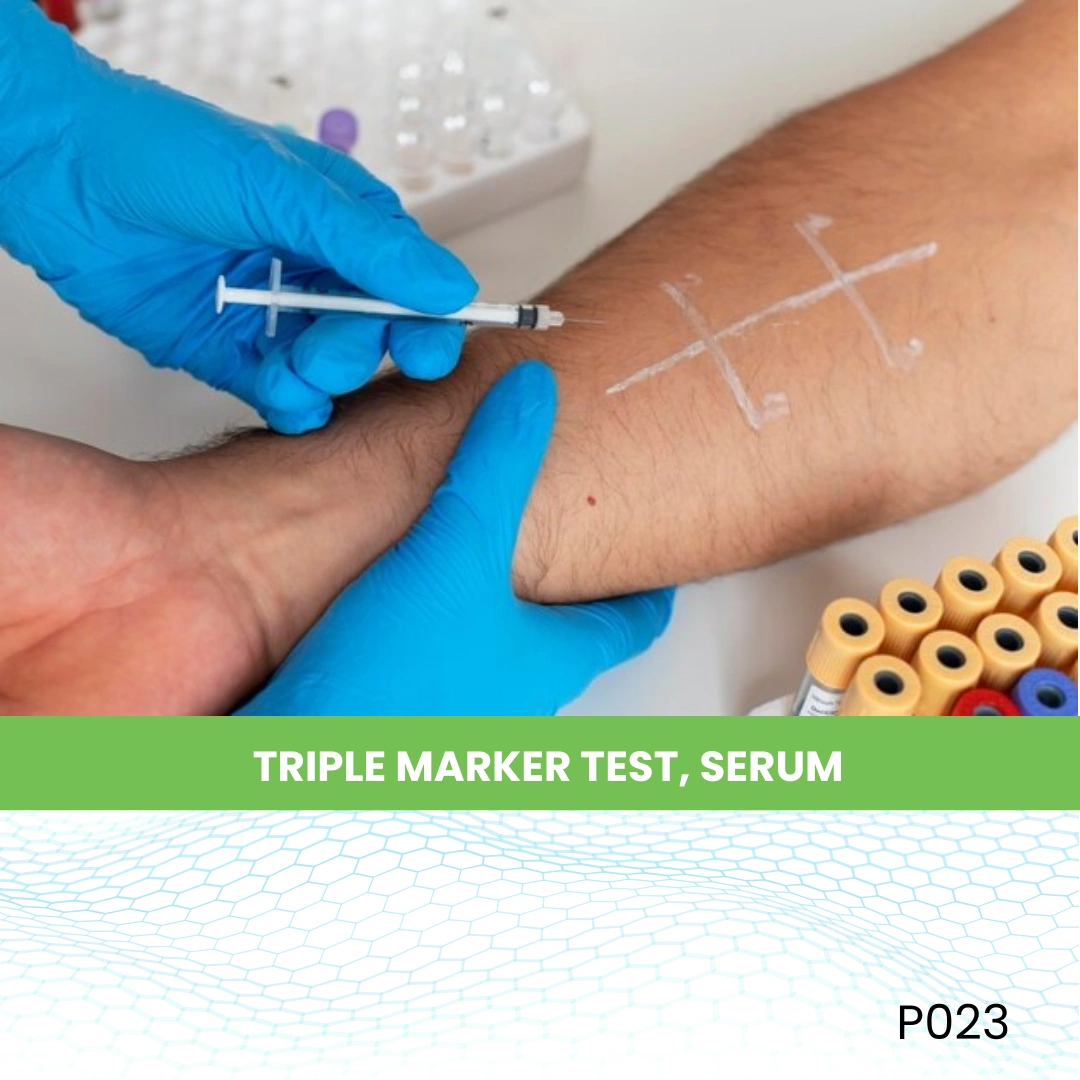
The Triple Marker Test, also called the Triple Screen or Multiple Marker Test, is a prenatal blood screening performed during the second trimester of pregnancy. It measures the levels of three important substances in the mother’s blood: Alpha-fetoprotein (AFP), Human Chorionic Gonadotropin (hCG), and Unconjugated Estriol (uE3). These markers help evaluate the risk of certain genetic and developmental conditions in the baby.
Uses
This test is primarily used to screen for chromosomal abnormalities such as Down syndrome (Trisomy 21) and Edwards syndrome (Trisomy 18). It also helps detect neural tube defects like spina bifida and anencephaly. Doctors may recommend the test to assess general fetal health and guide further diagnostic tests if needed, such as amniocentesis or NIPT (Non-Invasive Prenatal Testing).
Symptoms / Conditions That May Lead to the Test
The Triple Marker Test is usually offered between 15–20 weeks of pregnancy, ideally at 16–18 weeks. It is part of routine prenatal screening for all pregnant women. The test is especially important in higher-risk pregnancies, such as women of advanced maternal age, those with a family history of genetic disorders, or women who previously had a child with birth defects.
Abnormal Results
High AFP: May indicate neural tube defects, abdominal wall defects, multiple pregnancies, or underestimated gestational age.
Low AFP, High hCG, Low Estriol: Suggests a higher risk of Down syndrome.
Low AFP, Low hCG, Low Estriol: Suggests a higher risk of Edwards syndrome.
Normal Results: Suggest low likelihood of the above conditions but do not guarantee absence of abnormalities.
Risks
The test involves only a routine maternal blood draw and is safe for both mother and baby. Risks are minimal and may include mild pain, bruising, or bleeding at the puncture site, and rarely dizziness or infection.


Reviews
There are no reviews yet.