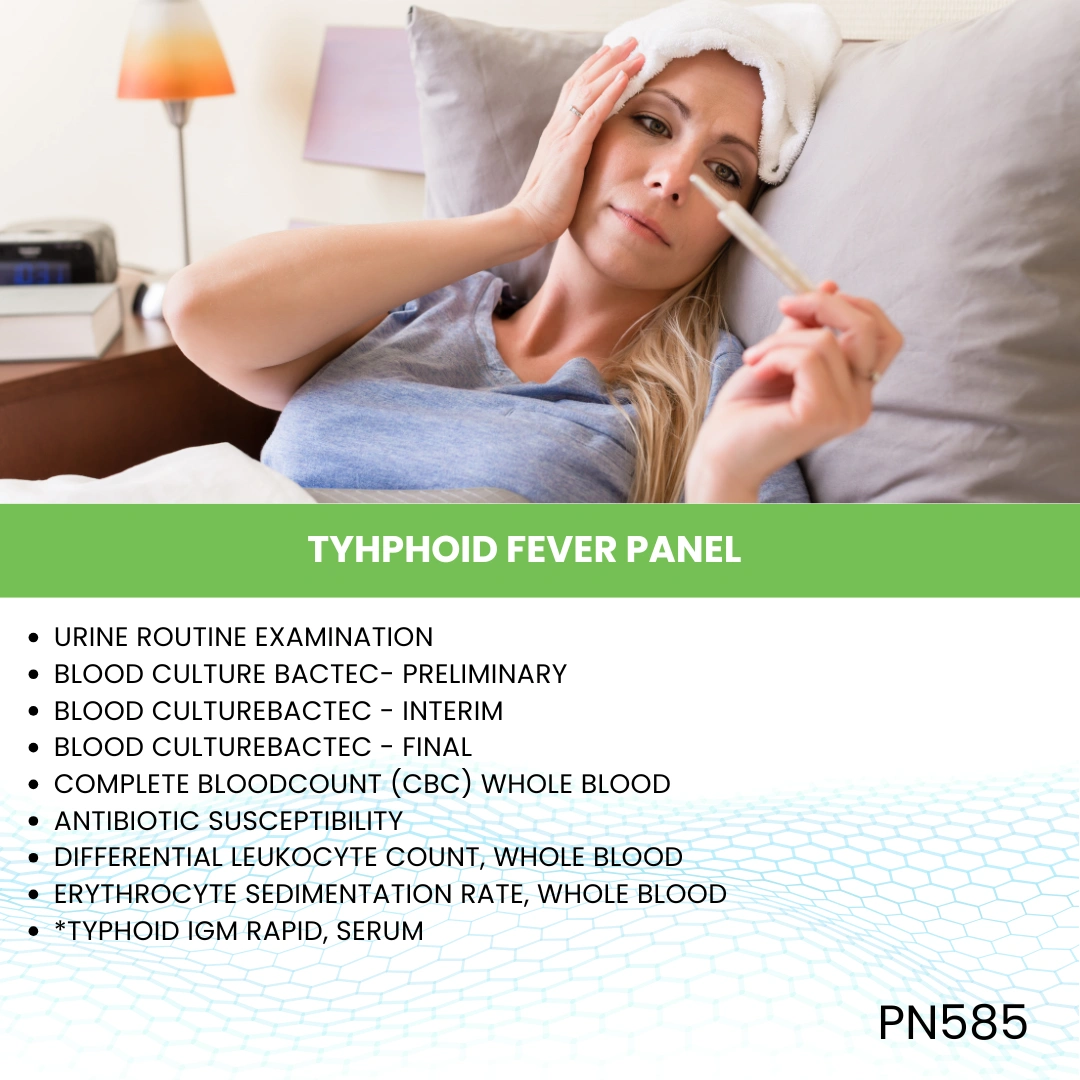
Typhoid Fever Panel
What it is
The Typhoid Fever Panel is a diagnostic blood test that detects infection caused by Salmonella typhi and Salmonella paratyphi, the bacteria responsible for typhoid and paratyphoid fever. This panel usually includes serological tests such as the Widal test, and in some cases antibody detection or culture methods, to confirm the presence of typhoid infection.
Uses
The test is used to diagnose suspected cases of typhoid fever, monitor the progression of the disease, and support timely treatment decisions. It is especially helpful in endemic regions or in patients showing symptoms suggestive of typhoid infection.
Symptoms That May Lead to the Test
Doctors may recommend the Typhoid Fever Panel if a patient presents with persistent fever, abdominal pain, headache, diarrhea or constipation, loss of appetite, skin rash (rose spots), or history of contaminated food and water exposure.
Abnormal Results
Positive Result: Indicates possible infection with Salmonella typhi or Salmonella paratyphi. Confirmatory tests such as culture or PCR may be required for final diagnosis.
Negative Result: Suggests no evidence of infection, though testing early in the illness or after antibiotic use may sometimes give false negatives.
Risks
The Typhoid Fever Panel is performed using a routine blood sample. Risks are minimal and limited to mild pain, bruising, or bleeding at the puncture site, and rarely dizziness or infection.


Reviews
There are no reviews yet.