Anti-PR3 Antibodies
What it is
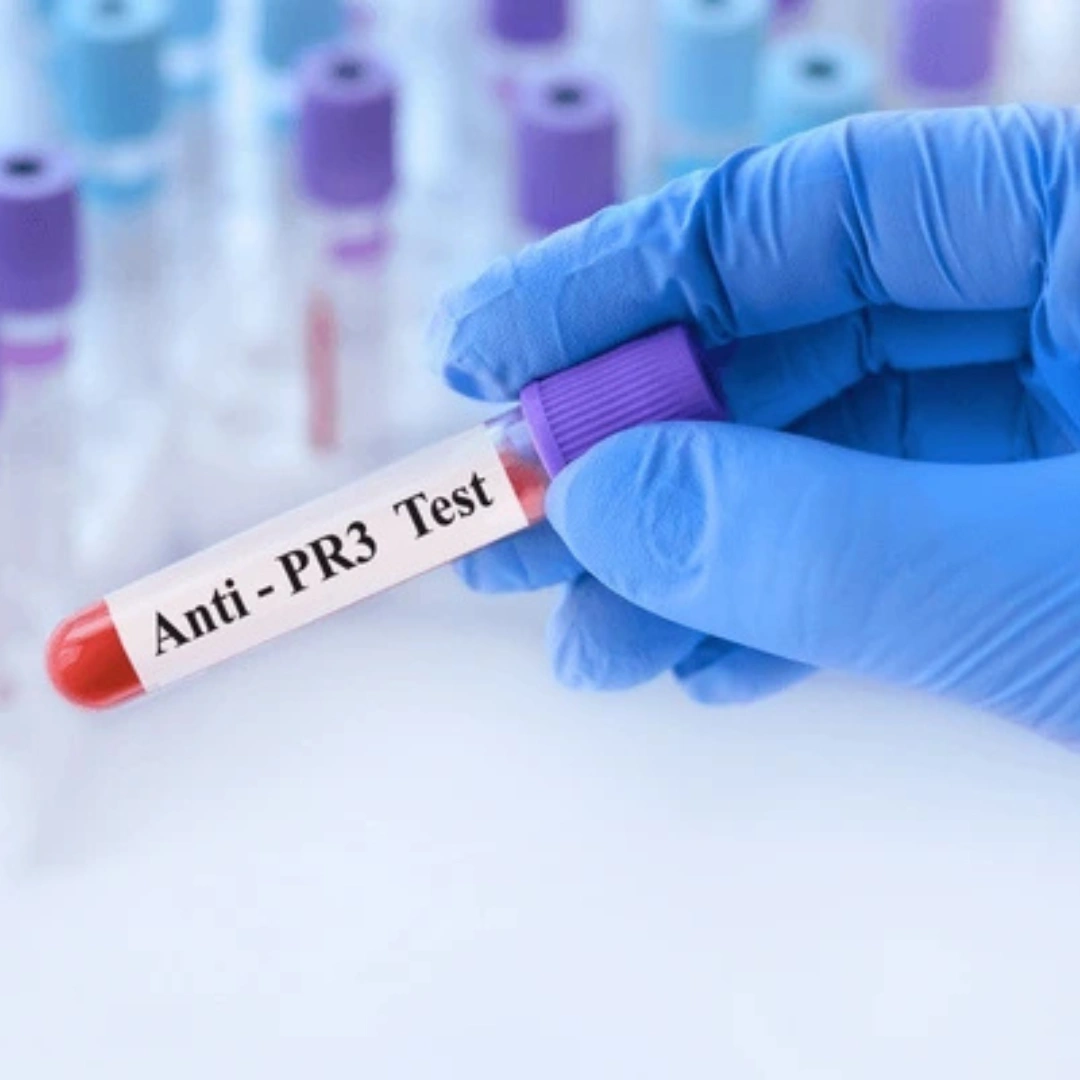
The Anti-PR3 Antibodies test detects antibodies against Proteinase 3 (PR3), an enzyme found in neutrophils. These antibodies are a type of ANCA (Anti-Neutrophil Cytoplasmic Antibodies) and are strongly associated with autoimmune vasculitis, particularly Granulomatosis with Polyangiitis (GPA), formerly known as Wegener’s granulomatosis.
Uses
This test is used to help diagnose ANCA-associated vasculitis, mainly GPA. It also assists in distinguishing between different types of vasculitis and monitoring disease activity or relapse in patients undergoing treatment.
Symptoms That May Lead to the Test
Doctors may order this test if a patient has persistent sinus infections, nasal ulcers, chronic cough, shortness of breath, unexplained kidney problems, blood in urine, skin rashes, joint pain, or systemic symptoms like fever and weight loss.
Abnormal Results
Positive Anti-PR3 Antibodies: Strongly suggest the presence of Granulomatosis with Polyangiitis (GPA) or other ANCA-associated vasculitis. May also be detected in other autoimmune conditions, though less commonly.
Negative Anti-PR3 Antibodies: Reduces the likelihood of GPA but does not completely rule out vasculitis, as some patients may have Anti-MPO antibodies instead.
Risks
The Anti-PR3 Antibodies test is a routine blood test with minimal risks. Possible side effects include mild pain, bruising, or bleeding at the puncture site, and rarely dizziness or infection.


Reviews
There are no reviews yet.