Arsenic, Blood
What it is
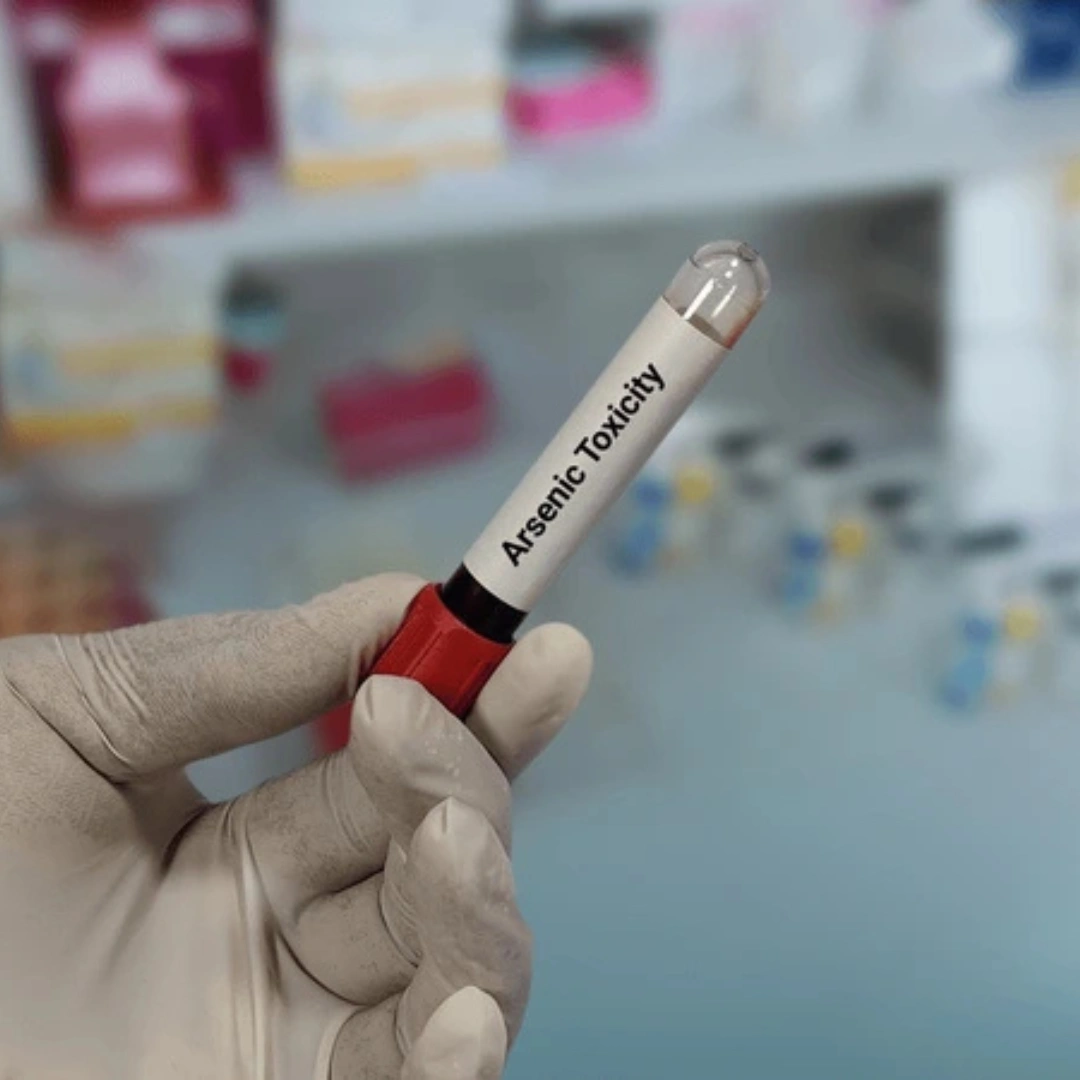
The Arsenic, Blood test measures the level of arsenic present in the bloodstream. Arsenic is a toxic heavy metal that can enter the body through contaminated water, food, industrial exposure, or occupational hazards. This test is most useful for detecting recent or acute arsenic exposure.
Uses
This test is used to diagnose acute arsenic poisoning, confirm exposure in suspected cases, and monitor individuals who may be at risk due to occupational or environmental factors. It can also help in guiding treatment decisions during toxic exposure cases.
Symptoms That May Lead to the Test
Doctors may recommend this test if you experience nausea, vomiting, abdominal pain, diarrhea, muscle cramps, skin changes, confusion, numbness, tingling, or cardiovascular problems. It is also performed in cases of suspected industrial or accidental arsenic exposure.
Abnormal Results
High Arsenic Levels: Suggest acute or recent arsenic poisoning, often from contaminated food, water, or workplace exposure.
Normal/Low Arsenic Levels: Usually indicates no recent exposure, though chronic exposure may not always be detected in blood and may require urine or hair testing for confirmation.
Risks
The test requires a routine blood sample with minimal risks. Possible side effects include mild pain, bruising, or bleeding at the puncture site. Rarely, dizziness or infection can occur.


Reviews
There are no reviews yet.