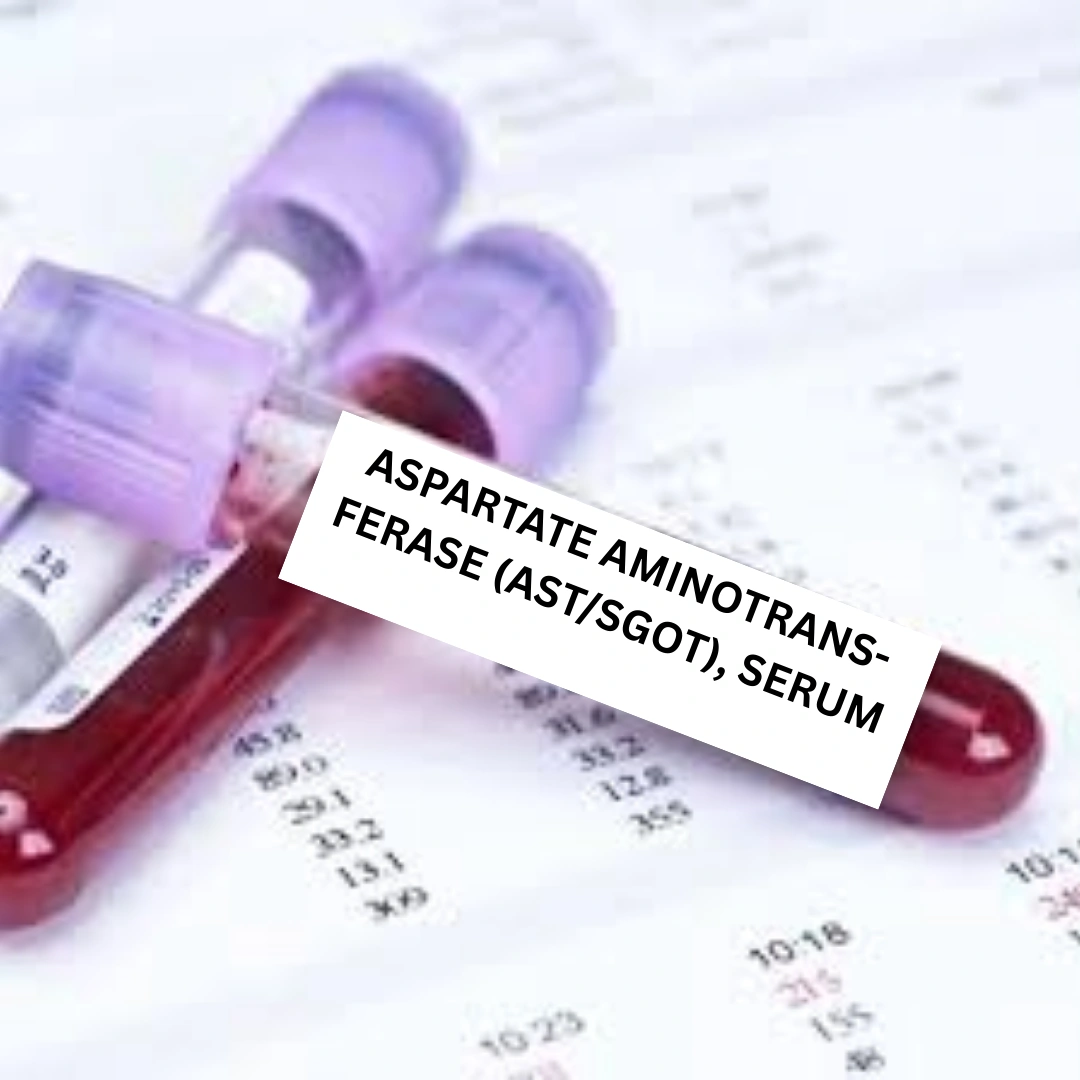
Aspartate Aminotransferase (AST/SGOT), Serum
What it is
The Aspartate Aminotransferase (AST), also known as Serum Glutamic Oxaloacetic Transaminase (SGOT), is an enzyme found mainly in the liver, heart, muscles, and other tissues. The AST/SGOT test measures the amount of this enzyme in the blood. Elevated levels often indicate liver damage, heart disease, or muscle injury.
Uses
This test is commonly used to detect and monitor liver diseases such as hepatitis, cirrhosis, and fatty liver. It also helps in diagnosing heart problems like heart attack, and muscle disorders. AST/SGOT is often ordered along with ALT (SGPT) to evaluate overall liver health.
Symptoms That May Lead to the Test
Doctors may recommend this test if you experience symptoms like jaundice (yellowing of eyes/skin), fatigue, nausea, vomiting, abdominal pain, swelling, dark urine, or unexplained muscle weakness and pain. It is also used for routine liver function screening in high-risk patients.
Abnormal Results
High AST/SGOT levels: May indicate liver disease (hepatitis, cirrhosis, alcoholic liver disease, fatty liver), heart attack, muscle injury, or pancreatitis. Certain medications and toxins can also elevate AST levels.
Low AST/SGOT levels: Generally not clinically significant, but may be seen in vitamin B6 deficiency or during pregnancy.
Risks
The AST/SGOT test is a routine blood test with minimal risks. Some people may experience mild pain, bruising, or bleeding at the puncture site, and rarely dizziness or infection.


Reviews
There are no reviews yet.