Coagulation Panel
What it is
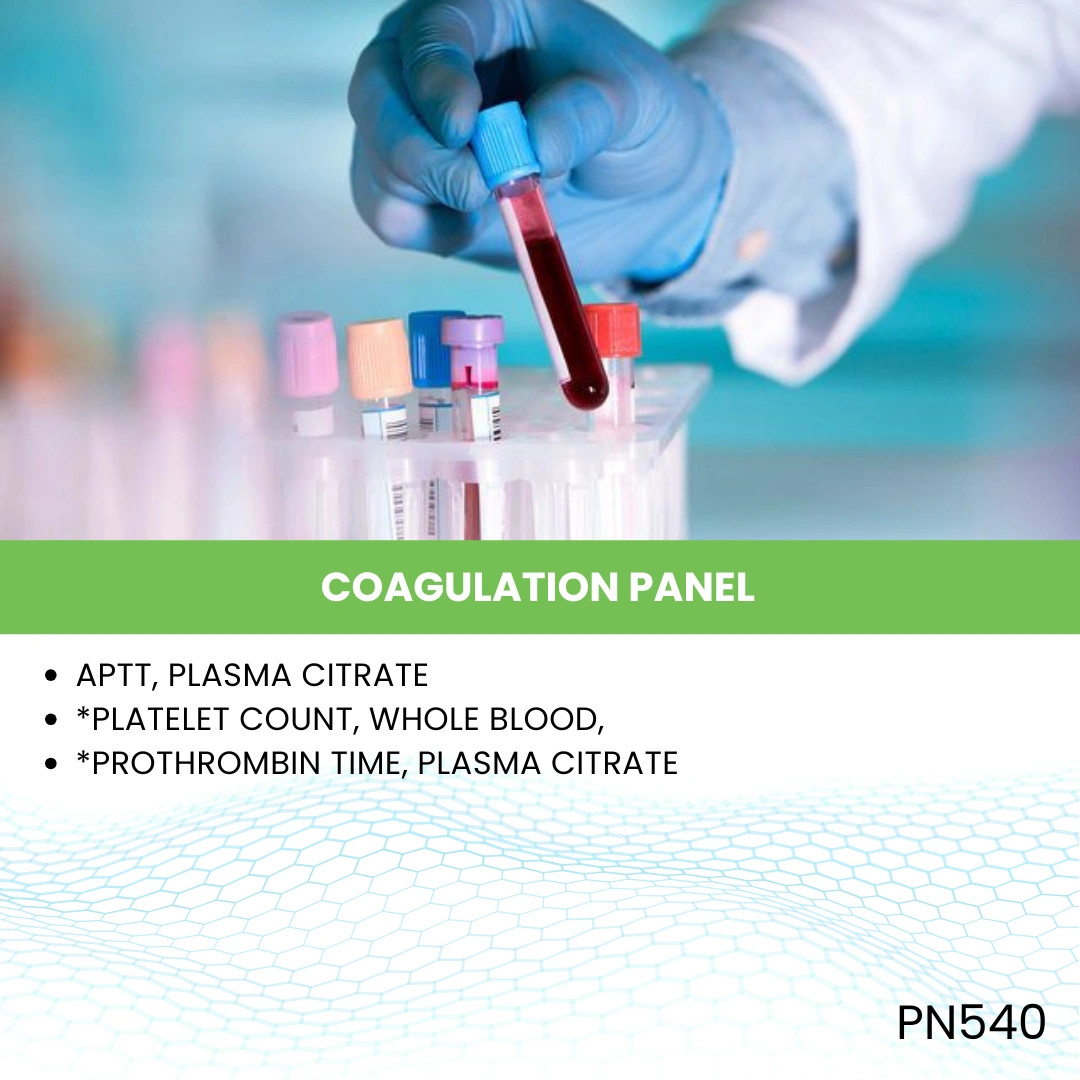
The Coagulation Panel is a group of blood tests that evaluate how well your blood clots. It typically includes Prothrombin Time (PT), International Normalized Ratio (INR), Activated Partial Thromboplastin Time (aPTT), Fibrinogen, and sometimes additional clotting factor assays. These tests help assess the balance between bleeding and clotting in the body.
Uses
This panel is used to diagnose bleeding disorders, monitor anticoagulant therapy (such as warfarin or heparin), evaluate liver function (since many clotting factors are produced in the liver), and investigate unexplained bruising, excessive bleeding, or abnormal clotting. It is also frequently performed before surgery to reduce the risk of bleeding complications.
Symptoms That May Lead to the Test
Doctors may recommend this panel if you experience frequent nosebleeds, easy bruising, prolonged bleeding after cuts or surgery, heavy menstrual bleeding, unexplained blood clots, or if you are taking blood-thinning medication. It may also be ordered for patients with liver disease or a family history of clotting disorders.
Abnormal Results
Prolonged PT/INR: May indicate liver disease, vitamin K deficiency, or warfarin therapy.
Prolonged aPTT: Can suggest hemophilia, heparin therapy, or other clotting factor deficiencies.
Low Fibrinogen: May signal disseminated intravascular coagulation (DIC), liver dysfunction, or advanced bleeding disorders.
High Fibrinogen: Often seen in inflammation or pregnancy and may increase risk of clot formation.
Risks
The panel requires a blood sample, usually from a vein in the arm. Risks are minimal and may include slight bruising, mild pain, or temporary dizziness at the puncture site. These side effects are minor and short-lived.


Reviews
There are no reviews yet.