DHEA (Dehydroepiandrosterone)
What it is
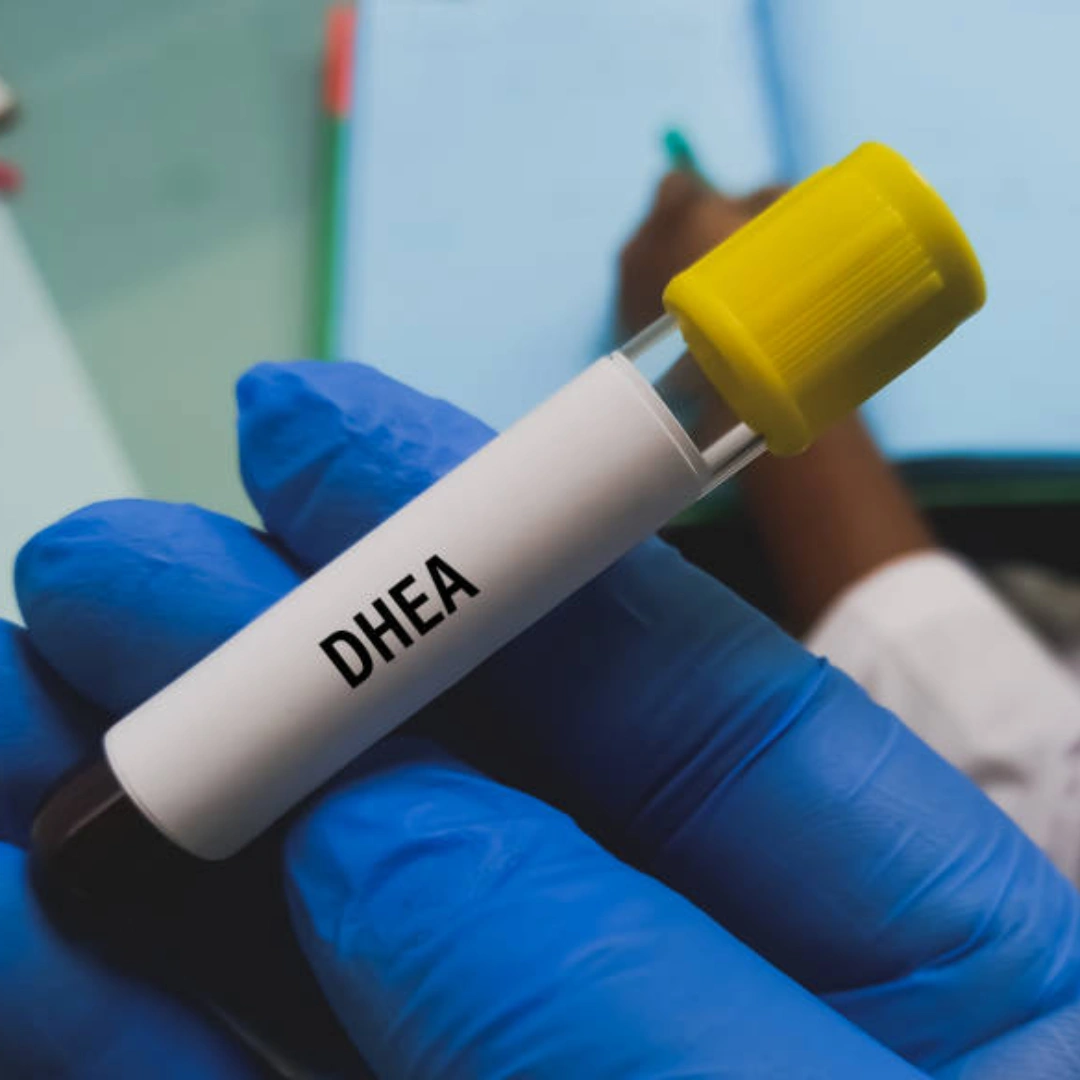
The DHEA (Dehydroepiandrosterone) test measures the level of DHEA in the blood, a hormone produced mainly by the adrenal glands. DHEA serves as a precursor for both male and female sex hormones, including testosterone and estrogen. Abnormal levels can indicate adrenal gland disorders, hormonal imbalances, or other endocrine-related conditions.
Uses
This test is used to evaluate adrenal function, diagnose causes of excess androgen production, and investigate symptoms of hormonal imbalance. It is commonly ordered in cases of suspected adrenal tumors, polycystic ovary syndrome (PCOS), congenital adrenal hyperplasia, or premature puberty. It may also be used in assessing low hormone states such as adrenal insufficiency.
Symptoms That May Lead to the Test
Doctors may recommend this test if you experience irregular menstrual cycles, infertility, excessive body hair (hirsutism), acne, deepening of the voice, or signs of virilization in women. In men, it may be indicated if there are signs of estrogen excess, infertility, or abnormal sexual development. It may also be ordered in children with unusually early or delayed puberty.
Abnormal Results
Elevated DHEA: May suggest adrenal tumors, congenital adrenal hyperplasia, or PCOS in women. It can also indicate abnormal androgen production.
Low DHEA: May indicate adrenal insufficiency, hypopituitarism, or aging-related hormonal decline. Low levels can contribute to fatigue, low libido, and reduced bone density.
Risks
The test requires a routine blood sample. Risks are minimal and may include slight pain, bruising, or dizziness at the puncture site. These side effects are temporary and uncommon.


Reviews
There are no reviews yet.