Dialysis Screen
What it is
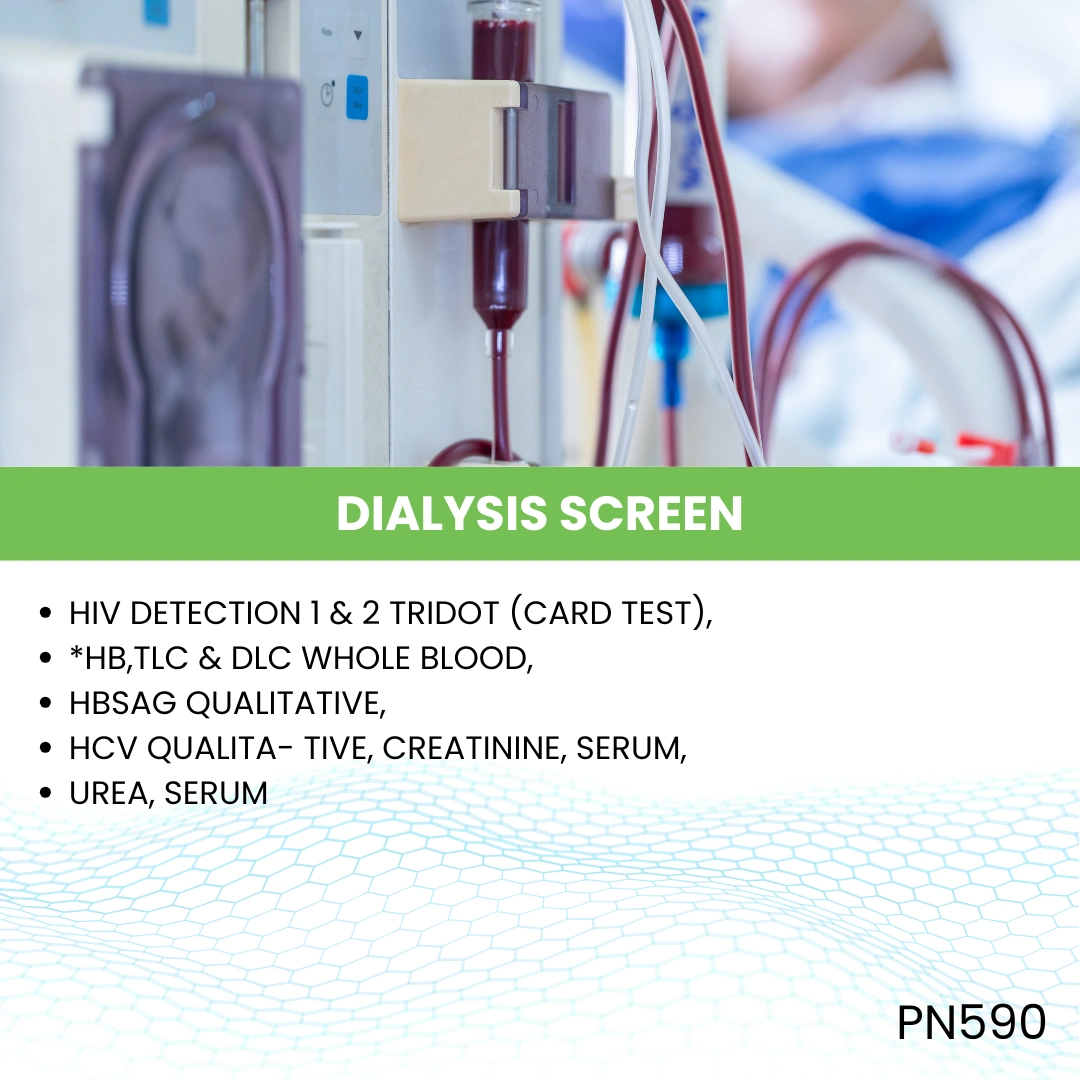
The Dialysis Screen is a panel of laboratory investigations designed to provide baseline evaluation and routine monitoring for patients undergoing dialysis. It includes essential tests for kidney function, electrolyte balance, anemia status, and overall metabolic health. This screening helps ensure safe and effective dialysis therapy.
Uses
This screening panel is used to evaluate patients before starting dialysis and to monitor them regularly during treatment. It helps doctors assess the adequacy of dialysis, detect early complications such as electrolyte imbalance, anemia, or mineral bone disease, and make timely adjustments in dialysis prescription, diet, and medication.
Symptoms That May Lead to the Test
Although this test is routinely prescribed for all dialysis patients, it may be particularly important if you develop symptoms such as persistent fatigue, weakness, shortness of breath, muscle cramps, swelling, irregular heartbeat, or bone pain. These may indicate inadequate dialysis or treatment-related complications.
Abnormal Results
Kidney Function Markers (Urea, Creatinine): Elevated levels indicate toxin buildup and are monitored to assess dialysis effectiveness.
Electrolytes (Sodium, Potassium, Calcium, Phosphate): Imbalances may point to dietary noncompliance, inadequate dialysis, or increased risk of heart rhythm or bone problems.
Hemoglobin & CBC: Low values may reflect anemia of chronic kidney disease, requiring erythropoietin or iron therapy.
Normal/Stable Results: Suggest effective dialysis and reduced risk of complications, though continuous monitoring remains essential.
Risks
The test requires routine blood sampling, often performed alongside dialysis sessions. Risks are minimal and include mild pain, bruising, or dizziness at the puncture site, which resolve quickly.


Reviews
There are no reviews yet.