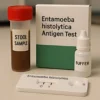
Entamoeba histolytica Antigen, EIA
What it is
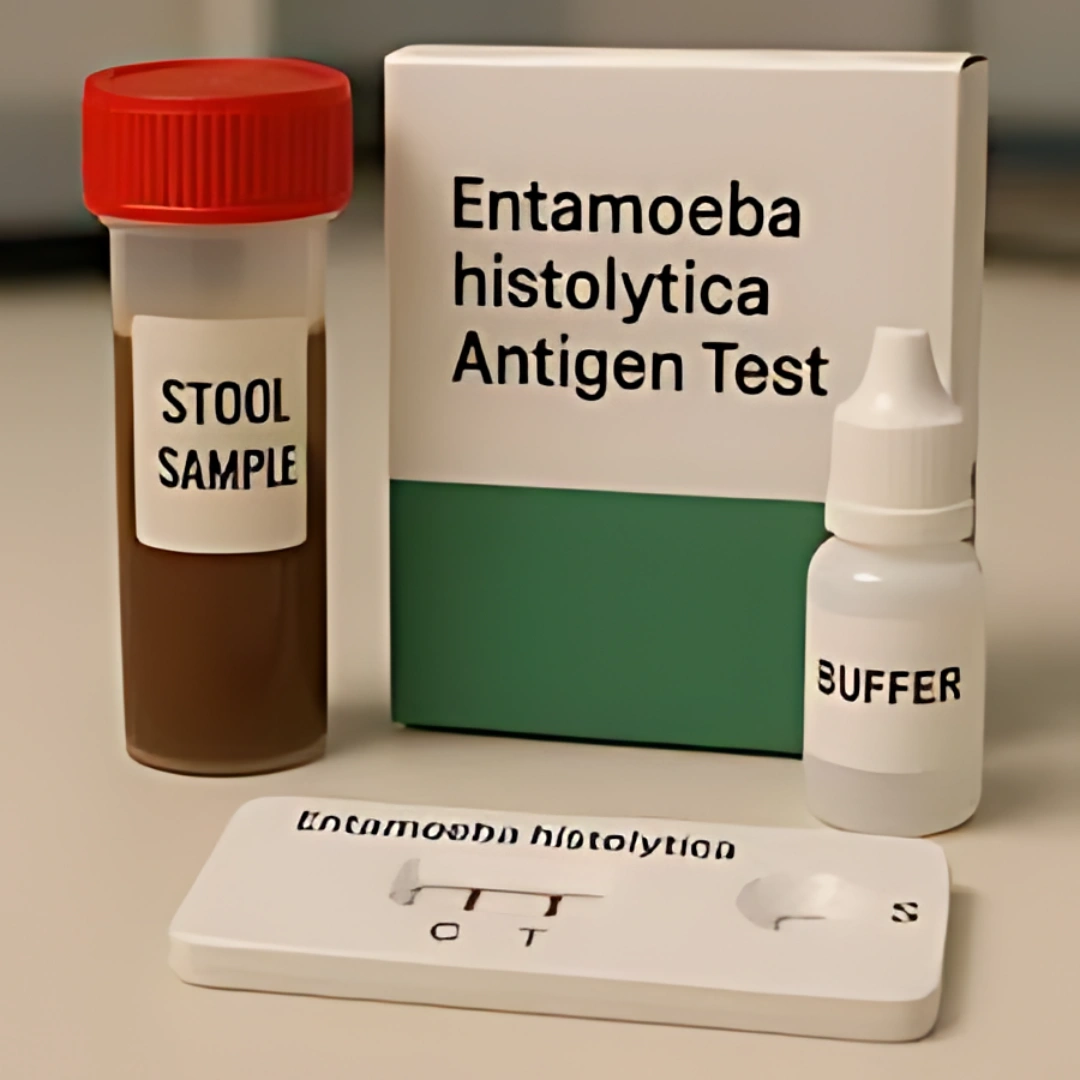
The Entamoeba histolytica Antigen, EIA test is an enzyme immunoassay (EIA) that detects antigens of Entamoeba histolytica in stool samples. This protozoan parasite is the causative agent of amoebiasis, which can manifest as intestinal infection (amoebic dysentery) or extraintestinal disease such as liver abscess. Unlike traditional microscopy, this test provides greater sensitivity and specificity for identifying pathogenic E. histolytica, distinguishing it from non-pathogenic species like E. dispar and E. moshkovskii.
Uses
This test is used to confirm amoebiasis in patients with gastrointestinal symptoms or suspected amoebic liver abscess. It helps differentiate true infection from colonization by non-pathogenic amoebae. It is particularly valuable in endemic regions and in cases where microscopy results are inconclusive.
Symptoms That May Lead to the Test
Doctors may order this test if you present with persistent diarrhea, abdominal pain, fever, bloody stools, weight loss, or signs of liver involvement (such as right upper abdominal pain, enlarged liver, or abscess formation). It is also recommended when routine stool microscopy detects cysts or trophozoites but requires confirmation of pathogenic species.
Abnormal Results
Positive Result: Confirms the presence of E. histolytica infection. This indicates active disease that may require treatment with anti-amoebic medication.
Negative Result: Suggests no evidence of E. histolytica antigen in the stool. However, a negative result does not entirely exclude infection, especially if the disease is localized in the liver. Further tests such as serology or imaging may be required.
Risks
The test requires only a stool sample, making it non-invasive and safe. There are no direct risks, though proper collection and handling of the sample are essential for accuracy.


Reviews
There are no reviews yet.