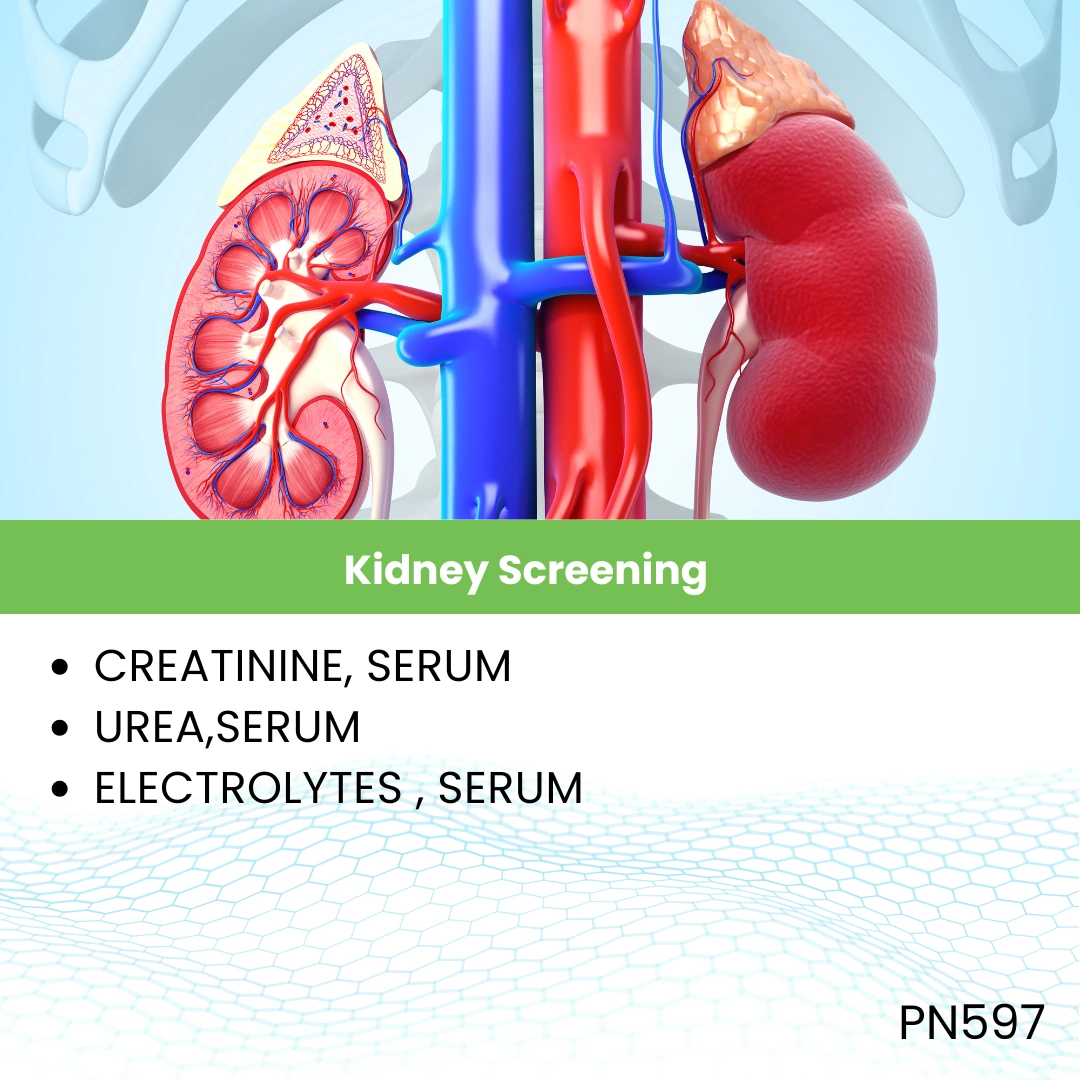
Kidney Screening
What it is
The Kidney Screening test is a basic health check designed to detect early signs of kidney dysfunction. It generally includes blood tests such as serum creatinine, blood urea nitrogen (BUN), uric acid, and estimated glomerular filtration rate (eGFR), along with a urine analysis to evaluate protein, blood, or other abnormalities. This screening helps identify kidney issues before symptoms become severe.
Uses
This test is used as a preventive health measure to assess kidney function, especially in individuals at risk of kidney disease. It helps in early detection of chronic kidney disease (CKD), monitoring patients with diabetes or hypertension, and evaluating the impact of certain medications that may stress the kidneys. It is also recommended as part of routine wellness check-ups.
Symptoms That May Lead to the Test
Doctors may suggest kidney screening if you experience swelling in the legs or around the eyes, changes in urination (such as foamy, bloody, or reduced output), persistent fatigue, high blood pressure, nausea, or unexplained weight loss. It is particularly important for people with diabetes, hypertension, or a family history of kidney disease.
Abnormal Results
Elevated Creatinine and BUN: May indicate reduced kidney function, dehydration, or early kidney disease.
Low eGFR: Suggests impaired filtration capacity, often seen in chronic kidney disease.
Abnormal Urine Findings: Protein, blood, or abnormal crystals in urine can signal kidney damage, infection, or systemic conditions affecting kidney health.
Risks
The test involves a simple blood draw and urine collection. Risks from the blood draw are minimal, such as mild pain, bruising, or dizziness. Urine collection is non-invasive and carries no risks.


Reviews
There are no reviews yet.