Manganese, Blood
What it is
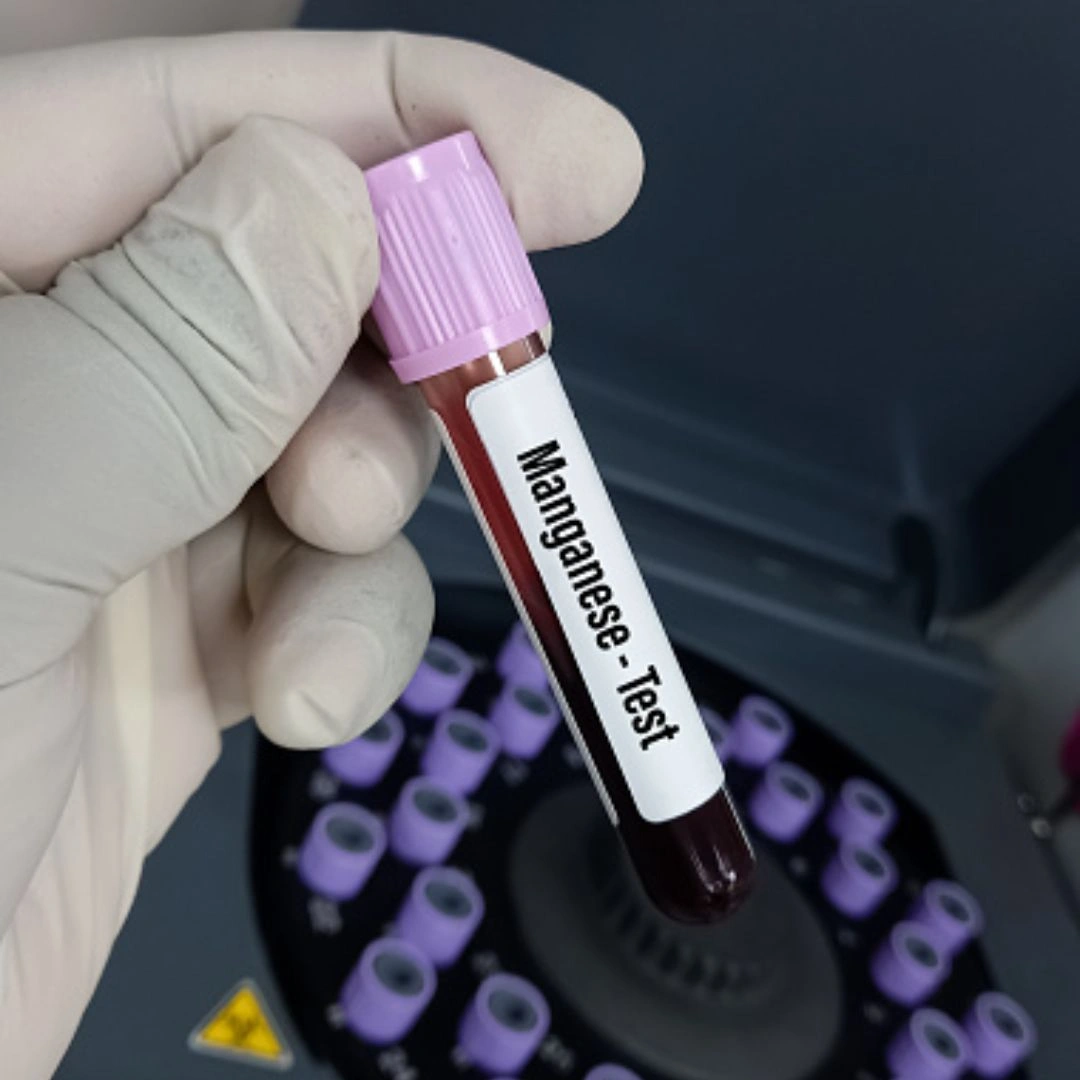
The Manganese, Blood test measures the level of manganese in the bloodstream. Manganese is an essential trace mineral involved in bone development, metabolism, wound healing, and enzyme activation. While it is necessary in small amounts, excess manganese can accumulate in the body and lead to toxicity, particularly affecting the nervous system.
Uses
This test is used to evaluate suspected manganese deficiency or toxicity. It is commonly ordered for individuals with occupational exposure (such as welders, miners, and steel workers), patients receiving long-term intravenous nutrition, or those with neurological symptoms unexplained by other conditions. It also helps in assessing environmental exposure and monitoring treatment for manganese-related disorders.
Symptoms That May Lead to the Test
Doctors may recommend this test if you present with neurological symptoms such as tremors, difficulty walking, muscle stiffness, mood changes, memory issues, or psychiatric disturbances. Other symptoms may include weakness, fatigue, or developmental concerns in children exposed to manganese-contaminated water or environments.
Abnormal Results
High Blood Manganese: May indicate manganese toxicity due to occupational or environmental exposure, liver disease (since manganese is normally excreted in bile), or excessive supplementation. Chronic high levels can cause a Parkinson’s-like condition known as manganism.
Low Blood Manganese: Is rare but may be linked to poor dietary intake, malnutrition, or impaired absorption. Deficiency can contribute to bone weakness, poor growth, and metabolic disturbances.
Risks
The test involves a standard blood draw, which carries minimal risks such as slight pain, bruising, or dizziness at the puncture site. These effects are temporary and usually resolve quickly.


Reviews
There are no reviews yet.