Microbe Bio TD Plus
What it is
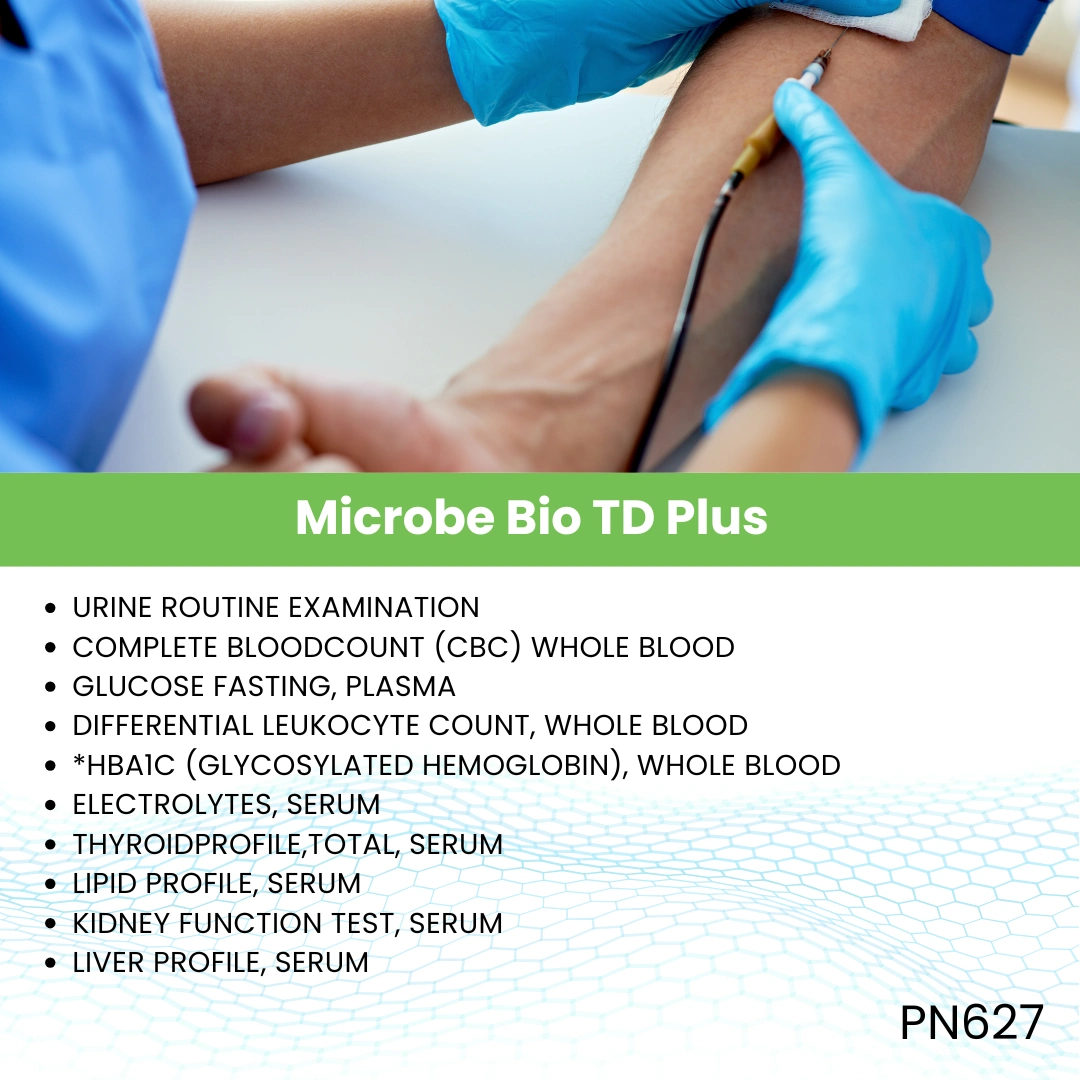
Microbe Bio TD Plus is a health-screening panel offered by diagnostic laboratories. It is an expanded version of “Bio-T” or “Bio-T Plus” style packages, including tests for thyroid, blood count, lipid profile, liver and kidney functions, plus additional parameters (denoted by “TD”)—these may include tests related to “T for Thyroid / Total” or “TD” being a lab’s naming for “higher / enhanced” panel. The “Plus” means there are more tests than in a standard/basic panel. It is designed for people wanting to get a more comprehensive check of their internal health—metabolism, organ function, risk factors—even if asymptomatic.
Typical Tests / What’s Included
While exact components may vary by lab, these are commonly included in the Microbe Bio TD Plus panel (or similar):
- Complete Blood Count (CBC) – red blood cells, white blood cells, hemoglobin, platelets, etc.
- Thyroid Profile – T3, T4, TSH
- Lipid Profile – cholesterol, HDL, LDL, triglycerides
- Glucose (fasting)
- Liver Function Tests – ALT, AST, ALP, bilirubin etc.
- Kidney Function Tests – creatinine, urea, etc.
- Uric Acid
- Electrolytes (if “Plus with Electrolytes” variant)
- Calcium, maybe other minerals
- Possibly some thyroid total / total T4 etc. (depending on “TD” meaning)
Uses
This package is used for preventive health screening—detecting early signs of metabolic syndrome, endocrinological dysfunction (thyroid), liver or kidney stress, assessing cardiovascular risk via lipid profile, and establishing a baseline of internal health.
Who should consider it
Good for individuals who:
- Want more thorough screening than basic packages
- Have risk factors like family history of thyroid disease, diabetes, or heart disease
- Want periodic monitoring (yearly or every few years) of internal organ health
- Are past a certain age (often 30-45+) when risk of metabolic/endocrine issues rises
Abnormal Results / Next Steps
If some test results are outside normal ranges, it may indicate:
- Thyroid dysfunction (hyperthyroid / hypothyroid) if TSH/T3/T4 abnormal
- High blood sugar or impaired glucose tolerance
- High cholesterol / LDL etc → cardiovascular risk
- Liver enzymes elevated → liver stress (fatty liver, alcohol effects, medications)
- Kidney markers abnormal → kidney function issues
- Electrolyte imbalances (if included)—important for heart / cell function
Next steps typically involve consulting a doctor, possibly repeating specific tests, making lifestyle changes (diet, exercise), or treating any condition diagnosed.
Risks / Limitations / Considerations
Risks are minimal (blood draw often required). Limitations include possible false positives/negatives, influences of recent diet/medications on results, variations between labs. Also, this is a screening tool, not diagnostic—abnormal findings need medical follow-up. Fasting may be required, and preparation varies by test. The “TD” variant might include tests that require more specimen volume or specific sample handling.


Reviews
There are no reviews yet.