Pre-Operative Advance
What it is
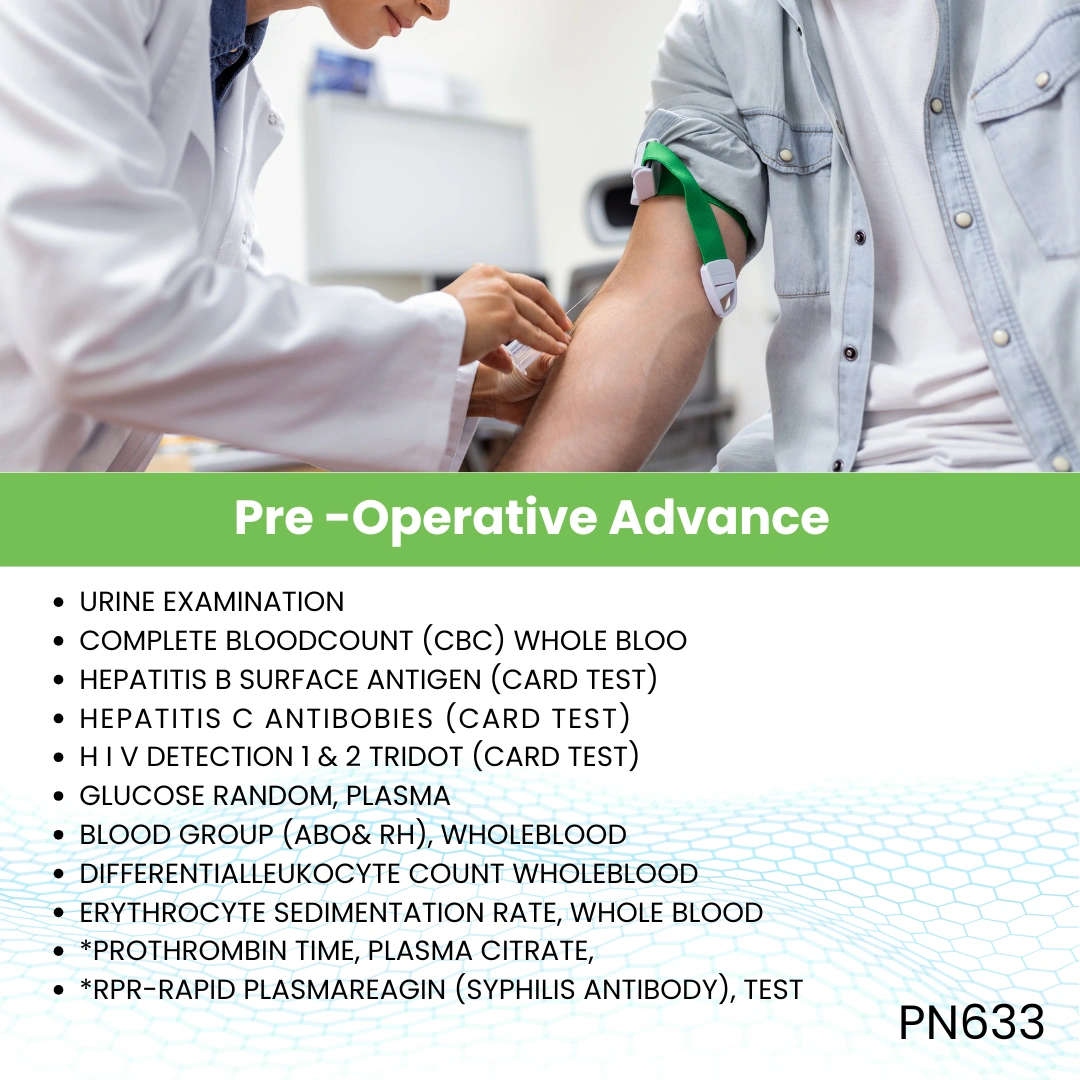
The Pre-Operative Advance panel is a comprehensive set of laboratory and diagnostic tests performed before surgery to assess a patient’s overall health and readiness for anesthesia and surgical procedures. It includes advanced investigations beyond basic pre-op screening, covering blood, kidney, liver, heart, and metabolic parameters to help minimize surgical risks.
Uses
This panel is used to:
– Identify underlying health issues that may complicate surgery.
– Assess organ function (kidney, liver, heart, lungs).
– Detect infections, bleeding or clotting disorders.
– Evaluate blood sugar, electrolytes, and immune status.
– Guide anesthetic planning and surgical decision-making.
It is particularly important for patients undergoing major or high-risk surgeries or those with chronic conditions such as diabetes, hypertension, or heart disease.
Symptoms / Conditions That May Lead to the Test
Doctors may recommend the Pre-Operative Advance panel if you:
– Are scheduled for major surgery.
– Have chronic illnesses (diabetes, hypertension, kidney or heart disease).
– Have a history of bleeding, clotting issues, or frequent infections.
– Are elderly or considered at higher surgical risk.
– Require a detailed pre-anesthetic evaluation.
Abnormal Results
Abnormal Blood Counts: May indicate anemia, infection, or bleeding risks.
Abnormal Kidney or Liver Function: May require delaying surgery or modifying medications.
Electrolyte Imbalances: Can increase the risk of arrhythmias and complications under anesthesia.
Blood Sugar Abnormalities: Important for diabetic management before surgery.
Clotting Abnormalities: May increase the risk of surgical bleeding or thrombosis.
All abnormal results are reviewed by the surgical and anesthetic team before proceeding.
Risks
The panel requires blood and sometimes urine samples. Risks are minimal, limited to mild pain, bruising, or dizziness at the puncture site. ECG, chest X-ray, or imaging components (if included) carry no major risks. The testing itself helps reduce surgical complications by detecting issues early.


Reviews
There are no reviews yet.