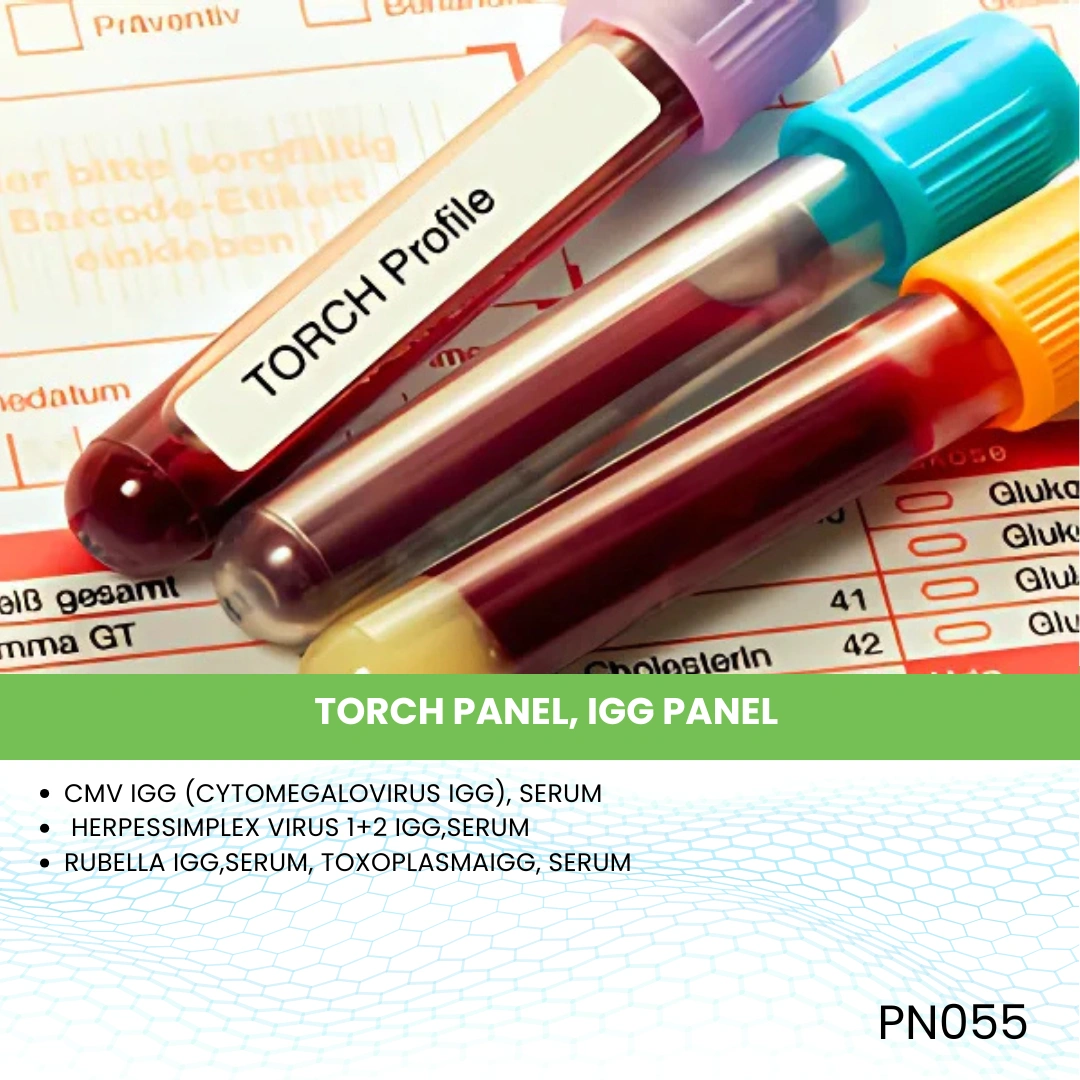
TORCH Panel, IgG Panel
What it is
The TORCH Panel, IgG Panel is a blood test that measures IgG antibodies against a group of infections known as TORCH. These include Toxoplasmosis, Other infections (such as syphilis, varicella, parvovirus B19), Rubella, Cytomegalovirus (CMV), and Herpes simplex virus (HSV). IgG antibodies generally indicate past infection or immunity.
Uses
This test is widely used in pregnancy to determine if a woman has prior immunity to TORCH infections. It helps differentiate between past and recent infections when used alongside IgM testing. It is also helpful in newborns to assess if maternal antibodies were passed on during pregnancy.
Symptoms That May Lead to the Test
Doctors may recommend this test for pregnant women during routine prenatal screening, especially if there is a risk of exposure to infectious diseases. It may also be advised in cases of recurrent miscarriage, unexplained pregnancy complications, or in newborns with developmental abnormalities.
Abnormal Results
Positive IgG: Suggests past infection or immunity. For example, a woman with positive rubella IgG is considered immune and protected from future infection.
Negative IgG: Indicates no prior exposure or immunity. This means the individual is still at risk of infection and may need preventive measures, such as vaccination (if available).
Risks
The TORCH IgG Panel is a standard blood test with minimal risks. Side effects are rare but may include mild pain, bruising, or bleeding at the puncture site, and occasionally dizziness or infection.


Reviews
There are no reviews yet.