Vanillylmandelic Acid (VMA), 24 Hours Urine
What it is
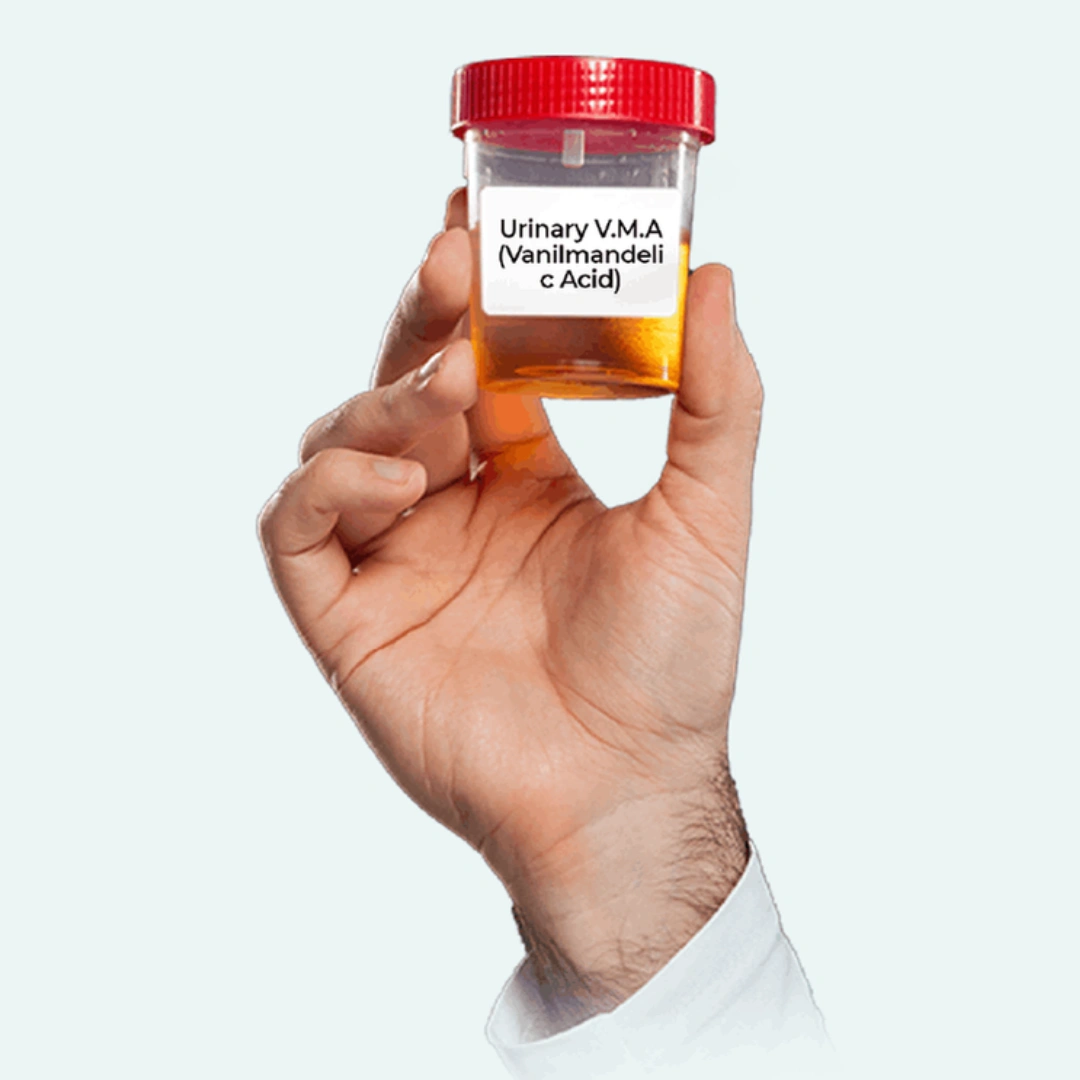
The Vanillylmandelic Acid (VMA) 24-hour urine test measures the amount of VMA, a breakdown product of catecholamines (epinephrine and norepinephrine), excreted in urine. Catecholamines are stress-related hormones produced by the adrenal glands. This test is primarily used to detect tumors such as pheochromocytomas and neuroblastomas, which cause excess production of catecholamines.
Uses
This test is used to diagnose or monitor conditions associated with excessive catecholamine secretion. It helps identify adrenal gland tumors, monitor treatment response, and detect tumor recurrence. It is also useful in evaluating unexplained high blood pressure, especially in younger patients.
Symptoms That May Lead to the Test
Doctors may order this test if you experience episodes of severe headaches, excessive sweating, palpitations, rapid heart rate, high blood pressure (often sudden or difficult to control), anxiety, flushing, or tremors. In children, the test may be ordered for symptoms suggestive of neuroblastoma, such as abdominal mass, unexplained weight loss, or bone pain.
Abnormal Results
Elevated VMA Levels: May suggest the presence of pheochromocytoma, paraganglioma, or neuroblastoma. Levels are often several times higher than normal in these conditions.
Normal VMA Levels: Suggest no excessive catecholamine production. However, some tumors may secrete hormones intermittently, so additional tests (like plasma metanephrines or imaging) may be required if suspicion remains high.
Risks
The test involves collecting all urine over a 24-hour period, which carries no direct physical risk. The main challenges are proper collection, storage, and handling of the urine sample. Certain foods and medications (like caffeine, chocolate, bananas, some blood pressure drugs) may affect results and should be avoided before testing as advised by a doctor.


Reviews
There are no reviews yet.