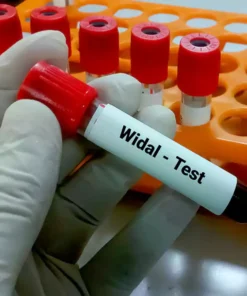
Widal Tube Agglutination Test
What it is
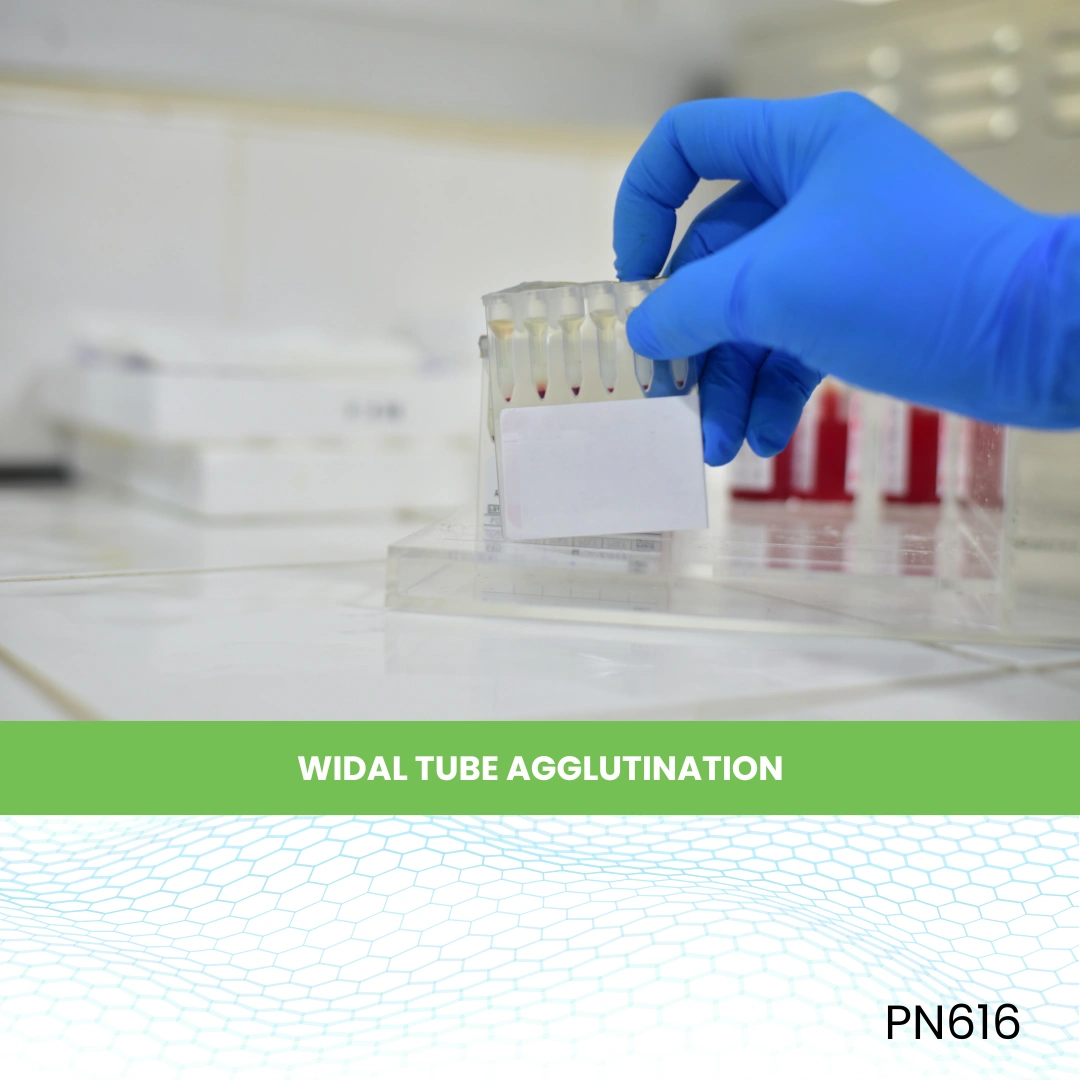
The Widal Tube Agglutination test is a diagnostic test used to detect antibodies (agglutinins) in the blood against Salmonella typhi and Salmonella paratyphi, the bacteria that cause typhoid and paratyphoid fever. It measures the presence of O (somatic) and H (flagellar) antibodies in a patient’s serum through tube agglutination method.
Uses
This test is commonly used for the diagnosis of typhoid fever, monitoring the course of infection, and supporting clinical suspicion of enteric fever in endemic regions. It helps differentiate between current and past infections when interpreted with antibody titers.
Symptoms That May Lead to the Test
Doctors may order this test in patients showing prolonged fever, abdominal pain, headache, diarrhea or constipation, loss of appetite, and enlarged spleen or liver. It is particularly relevant in areas with high prevalence of typhoid fever.
Abnormal Results
Positive Result: High antibody titers against O or H antigens indicate recent or active Salmonella infection. Rising titers in paired samples confirm typhoid fever.
Negative Result: No significant antibodies detected. Early infection may yield false negatives before antibody levels rise.
Risks
The test involves a standard blood draw, so risks are minimal. Possible side effects include mild pain, bruising, or bleeding at the puncture site, and rarely dizziness or infection.


Reviews
There are no reviews yet.